Model itinerary (based on research) — This plan was built from official sources listed at the end of the article. It is a researched model itinerary, not a visit report.
Most visitors give Fukuoka a day for ramen, shopping and a canal-side evening, and leave its shrines for a side trip to Dazaifu. Stay in the city, though, and a different Fukuoka appears: a merchant’s pond garden beside one of Japan’s oldest shrines, the boisterous guardian shrine of Hakata, a great Hachiman shrine facing the sea, and a strolling garden built on a castle moat. This one-day route strings them together by subway and on foot, at a pace that leaves room to sit down. If you have a second morning, pair it with our half-day plan for Dazaifu, Fukuoka’s famous neighbour.
At a Glance
- Duration: About 7–8 hours, including lunch and unhurried garden time
- Start / finish: Hakata Station area in the morning; Ohori Park and Tenjin in the late afternoon
- Main transport: Fukuoka City Subway and walking; one short bus or taxi hop is optional
- Walking: Moderate — the stops are compact, but the day adds up to several kilometres on foot; the Ohori Park pond loop is an optional extra of about 2 km
- Best seasons: Spring and late autumn for the gardens; early summer for hydrangea colour. Fukuoka summers are hot and humid — start early and rest indoors at midday
- Crowd-avoidance point: Choose the day first. The Ohori Park Japanese Garden is closed on Mondays and Rakusuien is closed on Tuesdays, so this route works Wednesday to Sunday. A weekday, with gardens visited near opening time, is the calmest version
- Garden admission on the day: ¥100 (Rakusuien) + ¥250 (Ohori Park Japanese Garden) for an adult; shrine grounds are free
Who this suits / who it may not: This suits travellers with a full spare day in Fukuoka — especially second-time visitors — who enjoy shrines and gardens more than landmarks. It may not suit anyone visiting on a Monday or Tuesday (one garden will be closed; see Practical Tips for how to adapt), or festival weeks, when Kushida and Hakozaki shrines become the centre of the city rather than a retreat from it.
Why Visit Fukuoka’s Shrines and Gardens
Fukuoka is really two old towns joined together: Fukuoka, the castle town, and Hakata, the merchants’ port facing the sea. Each half keeps its own sacred geography. In Hakata, the shrines belong to sailors, merchants and festivals; in the west, the castle moat became a public park, and its garden was designed by one of Japan’s great modern garden makers. Walking both halves in one day is a short course in how this city was made — and because these are neighbourhood shrines and city gardens rather than headline sights, the day keeps a local pace even when the city around it is busy.
The Itinerary
Times are a guide for shaping the day, not a promise. The order matters more than the clock — it puts each garden near its opening time and saves the pond for the late-afternoon light.
09:00 — Rakusuien Garden: A Merchant’s Villa Garden
Start at Rakusuien, a small pond-stroll garden about a ten-minute walk from Hakata Station. It began in 1906 as the villa garden of Shimozawa Zenemon Chikamasa, a Hakata merchant and tea lover; Fukuoka City restored the site and reopened it as a public garden in 1995. Look first at the wall by the entrance — a Hakata wall, built in the local tradition from stones and roof tiles hardened with clay, a technique that goes back to Toyotomi Hideyoshi’s rebuilding of Hakata. Inside, the garden is compact and complete: a pond fed by a small waterfall, stepping stones, tea rooms, and in one corner a suikinkutsu, a buried water vessel whose drips ring faintly underground. Half an hour is enough; forty-five minutes is better.
- Hours: 09:00–17:00. Closed on Tuesdays (the following day if Tuesday is a public holiday) and from December 29 to January 1; open on January 2 and 3
- Admission: ¥100 for adults, ¥50 for junior-high-school students and younger
09:45 — Sumiyoshi Shrine: The First Sumiyoshi
Rakusuien stands on the north side of Sumiyoshi Shrine, so the walk between them takes a minute or two. This Sumiyoshi is the Chikuzen Ichinomiya — the highest-ranking shrine of the old province — and by its own tradition the first of the 2,129 Sumiyoshi shrines across Japan, dedicated to the three Sumiyoshi deities of the sea. The present main hall, rebuilt in 1623, is a nationally designated Important Cultural Property in the old Sumiyoshi-zukuri style. The grounds are wooded and spacious for a city-centre shrine, and on an ordinary morning the people you meet are mostly neighbours. The shrine office reception hours are 09:00–17:00, and the shrine is about an eight-minute walk from Hakata Station — useful to know if you want to return another day.
10:45 — Kushida Shrine: Hakata’s Guardian
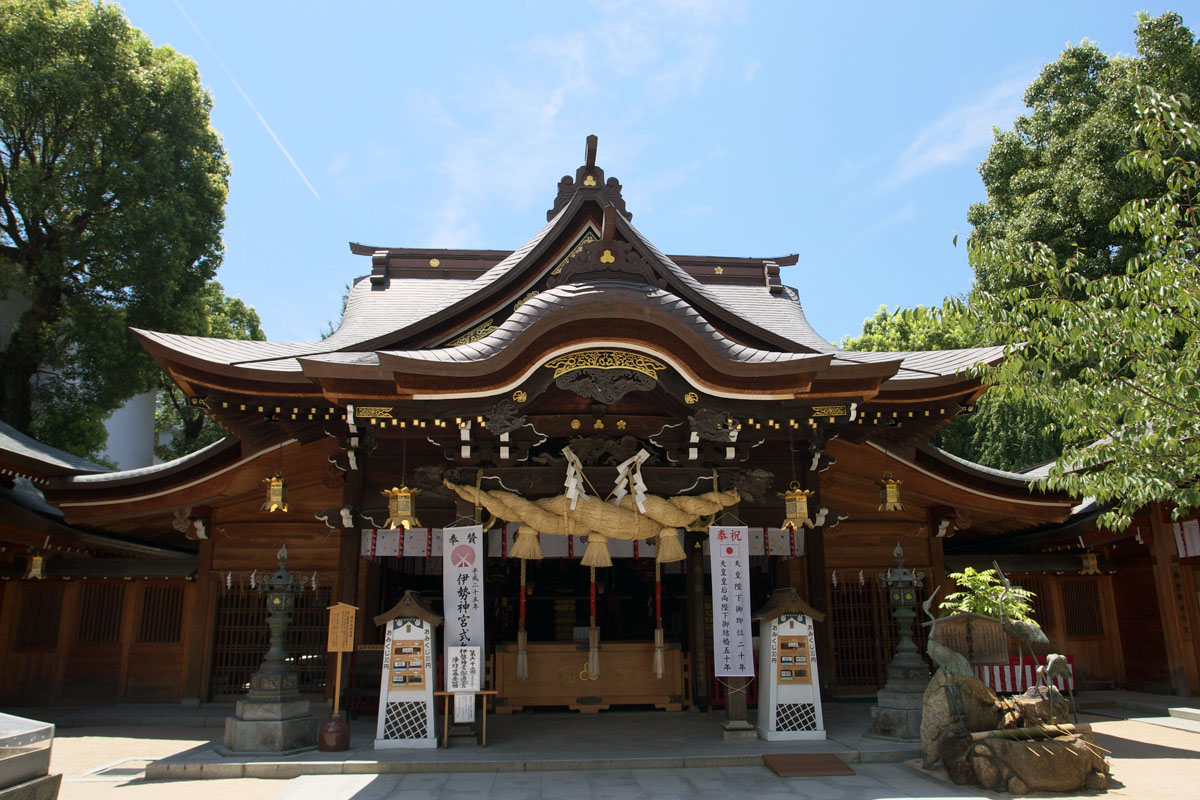
From Sumiyoshi, Kushida Shrine is a short bus ride or roughly a twenty-minute walk north into old Hakata. Kushida is the city’s beloved guardian shrine — locals call it Okushida-san — said to have been founded in 757 and dedicated to Amaterasu and Susanoo. For most of the year a towering decorated float, a kazari yamakasa, stands on display in the grounds, built by Hakata doll makers for the Hakata Gion Yamakasa festival. Come between July 1 and 15 and the picture reverses: the shrine becomes the starting point of the festival’s dawn race on July 15, and calm is not on offer at all. Outside festival season, allow time for the small Hakata History Museum in the grounds, which explains the festival and old Hakata (10:00–17:00, last entry 16:30, closed on Mondays; ¥300 for adults).
- Grounds: 04:00–22:00, every day. Shrine office and goshuin reception: 09:00–17:00
12:00 — Lunch in Old Hakata
Kushida Shrine opens onto the Kawabata shopping arcade and the lanes of old Hakata, the easiest lunch stop of the day. Eat here rather than later: the afternoon’s two stops have no food to speak of nearby, and a proper lunch is what makes the garden pace possible.
13:15 — Hakozaki Shrine: The Great Hachiman by the Sea
After lunch, ride the subway (Hakozaki Line, via Nakasu-Kawabata) out to Hakozakimiya-mae Station; the shrine’s tower gate is about three minutes from Exit 1. Hakozaki Shrine, founded in 923, enshrines Hachiman — Emperor Ojin, Empress Jingu and Tamayorihime — and ranks as one of Japan’s three great Hachiman shrines. Its tower gate carries the famous plaque “Tekikoku Kofuku” (“the enemy nation surrenders”), a prayer from the age of the Mongol invasions, when the shrine was burned and rebuilt; the main hall, worship hall and tower gate are all Important Cultural Properties. The long, straight approach runs toward the sea, and the precinct is the largest of today’s stops — give it a full hour, and longer in the flower seasons, when the shrine’s flower garden opens. One warning: during the Hojoya festival (September 12–18) the approach fills with hundreds of stalls and the shrine is at its busiest all year.
- Grounds (gates): 06:00–19:00. Amulet office: 08:30–17:30. Formal prayer reception: 09:00–16:30 (not available on some ritual days)
15:00 — Ohori Park Japanese Garden, and the Pond at Dusk
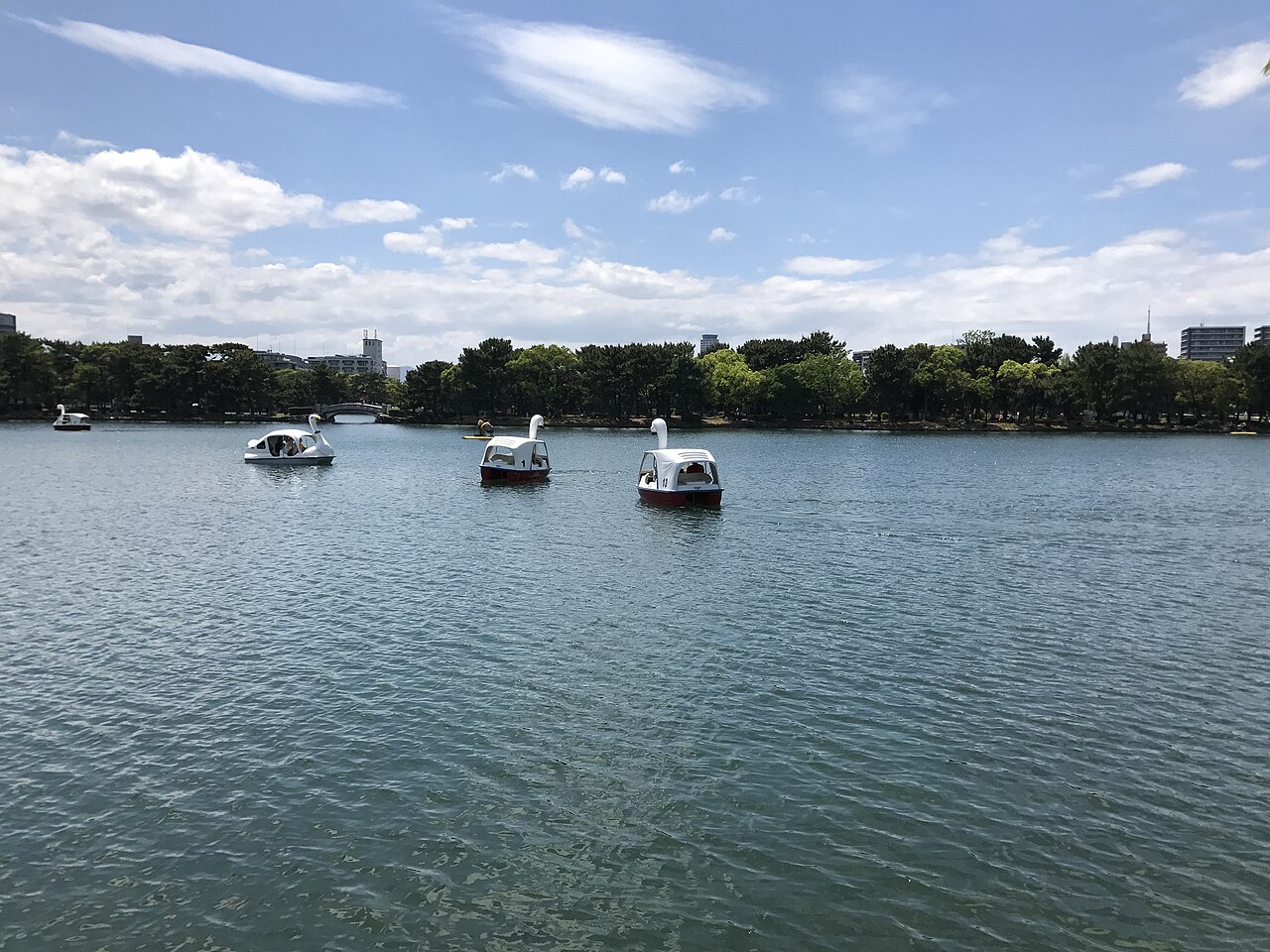
End the day in the west. From Hakozaki, the subway (Hakozaki Line to Nakasu-Kawabata, then the Airport Line) brings you to Ohori Koen Station; the Japanese Garden is about a ten-minute walk from there, at the southern end of Ohori Park. The park itself fills the old outer moat of Fukuoka Castle and opened in 1929; the garden was created in 1984 for the park’s 50th anniversary, designed by Kinsaku Nakane, one of Japan’s most celebrated modern garden makers. Across its 12,000 square metres a large pond, artificial hills, a waterfall, a dry landscape garden and a sukiya-style teahouse are arranged so the city’s sound falls away behind the trees. Arrive with at least an hour in hand — and in winter, well before the 16:45 last entry. Afterwards, walk as much of the pond loop as your legs allow, and finish the day in Tenjin, one subway stop or a short walk east, for dinner.
- Hours: May–September 09:00–18:00; October–April 09:00–17:00. Last entry 15 minutes before closing. Closed on Mondays (the following day if Monday is a public holiday) and from December 29 to January 3
- Admission: ¥250 for adults, ¥120 for children under 15; free for children under six and visitors aged 65 and over
Getting There
Every stop is inside Fukuoka City, and the whole day runs on the Fukuoka City Subway plus walking:
- Hakata Station → Rakusuien / Sumiyoshi Shrine: About 10 minutes on foot to the garden; the shrine is about 8 minutes on foot from the station. Nishitetsu buses also stop at Sumiyoshi.
- Sumiyoshi → Kushida Shrine: A short bus ride, a taxi, or roughly 20 minutes on foot through Hakata’s streets.
- Kushida → Hakozaki Shrine: Walk to Nakasu-Kawabata Station and take the Hakozaki Line to Hakozakimiya-mae (Exit 1, about 3 minutes to the tower gate). JR Hakozaki Station is also within walking distance of the shrine.
- Hakozaki → Ohori Park: Hakozaki Line back to Nakasu-Kawabata, change to the Airport Line for Ohori Koen Station; the garden is about 10 minutes on foot from the station.
- Check train times on the day with the Fukuoka City Subway’s official information, and garden opening days on each garden’s official site (links in Last Verified).
Respectful Travel
These shrines are places of worship first and sights second — Sumiyoshi and Kushida serve their neighbourhoods daily, and Hakozaki’s festivals belong to the whole city. Our full guide to shrine etiquette covers the basics: bow at the torii, walk to the side of the approach, rinse your hands at the water basin, and pray with two bows, two claps, one bow. In the gardens, stay on the paths, keep voices low around the tea rooms, and follow any signs about photography. Take litter home; neither gardens nor shrine grounds provide bins for visitors’ rubbish as a rule.
Practical Tips
- Fix the day of the week before anything else. The Ohori Park Japanese Garden is closed on Mondays and Rakusuien is closed on Tuesdays (each moves to the next day when the closing day is a public holiday), and both close over the New Year period. On a Monday, swap the Ohori garden for the park’s free pond loop and castle-ruins walk; on a Tuesday, start at Sumiyoshi Shrine and give Kushida more time instead.
- Festival weeks change everything. Hakata Gion Yamakasa (July 1–15, Kushida) and Hojoya (September 12–18, Hakozaki) are wonderful — and the opposite of a quiet day out. Choose them on purpose, not by accident.
- Mind the gardens’ last entry. Ohori’s garden takes its last visitors 15 minutes before closing — 16:45 in the October–April season. Build the afternoon backwards from that time.
- Carry cash in small denominations. Garden admission (¥100 and ¥250), offerings and goshuin are cash transactions; shrine offices cannot always break large notes.
- Summer heat is the real crowd. From June to September, do the shrine visits before noon, take lunch and the museum in the shade, and keep the gardens for later in the afternoon.
Where to Stay
This route starts near Hakata Station and ends near Tenjin, so either district works as a base. Hakata Station is the more practical choice if you are arriving or leaving by shinkansen or using the airport line heavily — the first stop of the day is a ten-minute walk away. Tenjin suits travellers who want the widest choice of evening restaurants and an easy finish to this route. Either way, a hotel within a few minutes’ walk of a subway station keeps the day exactly as simple as it is written here.
FAQ
Can I do this route without a car?
Yes — it is designed for the subway and walking, and a car would mostly be a parking problem. Every stop is within about ten minutes’ walk of a station or of Hakata Station itself.
What if I only have half a day?
Take either half. Hakata’s half — Rakusuien, Sumiyoshi and Kushida — makes a gentle morning ending with lunch in the old town. The western half — Hakozaki Shrine and Ohori Park — pairs a great shrine with the garden and the pond. Our Dazaifu half-day is the other natural pairing if shrines are your priority.
How much does the day cost?
Very little beyond transport and lunch: shrine grounds are free, and the two gardens together cost ¥350 for an adult. The Hakata History Museum adds ¥300 if you include it.
Which season is best for the gardens?
Spring for fresh green and cherry blossom around the park, late autumn for maple colour in both gardens, and early summer for hydrangeas. The gardens are designed for all four seasons; only the New Year closure and the weekly closing days truly rule dates out.
Are the shrines welcoming to visitors who are not Shinto?
Yes. Shrines are open to everyone; follow the etiquette basics linked above, keep a quiet manner near the halls, and you are a welcome guest.
Last Verified
Facts in this article were checked on November 29, 2026 against the following sources:
- Ohori Park Japanese Garden official site — hours, closing days, admission, garden overview and access: https://www.ohoriteien.jp/en/
- Fukuoka City Official Tourist Guide — Japanese gardens in Fukuoka City (Rakusuien and Ohori: hours, closures, fees, history): https://www.gofukuoka.jp/articles/detail/c3b72438-fcfb-47a7-a3e4-b29824a657e2
- Fukuoka City Official Tourist Guide — Kushida Shrine (grounds 04:00–22:00, reception 09:00–17:00): https://gofukuoka.jp/articles/detail/867f1e71-3a3d-47c7-8ca3-fe3a71b80a2a
- Crossroad Fukuoka (Fukuoka Prefecture official travel guide) — Kushida Shrine: https://www.crossroadfukuoka.jp/en/articles/kushidashrine and Sumiyoshi Shrine (reception 09:00–17:00): https://www.crossroadfukuoka.jp/en/spot/12552
- Hakozaki Shrine official site — gates, office and prayer reception hours, access from Hakozakimiya-mae Station: http://www.hakozakigu.or.jp/
- Rakusuien official site: http://rakusuien.fukuoka-teien.com/
- Sumiyoshi Shrine official site (history, main hall): https://www.nihondaiichisumiyoshigu.jp/