
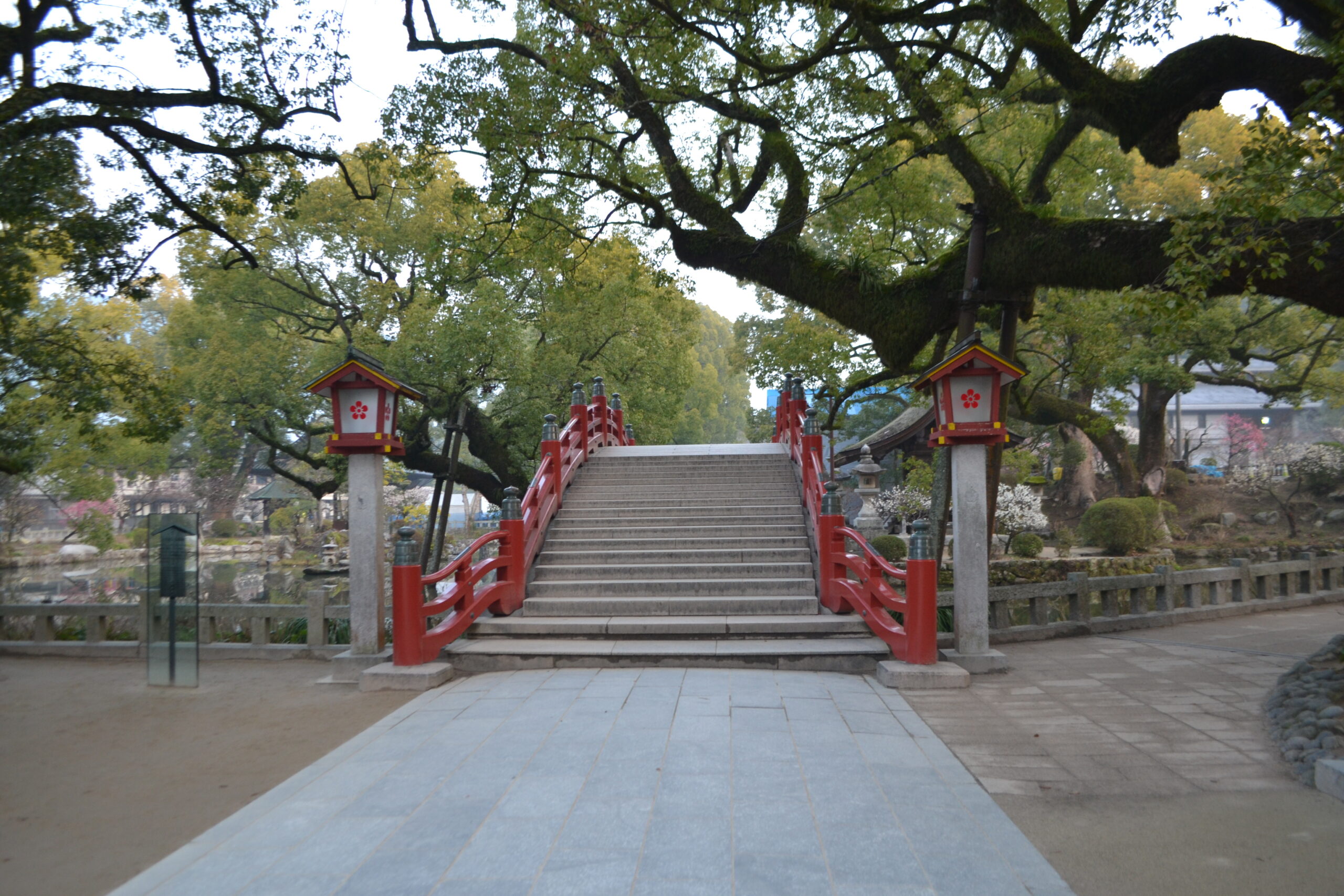
Model itinerary (based on research) — This plan was built from official sources listed at the end of the article. It is a researched model itinerary, not a visit report.
Dazaifu is the easiest quiet morning you can take from central Fukuoka: about half an hour by train, a short lantern-lined approach street, and one of Japan’s most important shrines at the end of it. This half-day plan is built around arriving in the earlier part of the morning, when the approach and the shrine grounds are at their calmest, and being back in the city around lunchtime — with time left over, if you want it, for the national museum next door.
At a Glance
- Duration: About 4 hours door to door (roughly 2.5–3 hours in Dazaifu itself)
- Start / finish: Nishitetsu Fukuoka (Tenjin) Station, Fukuoka
- Main transport: Nishitetsu train (Tenjin Ōmuta Line + Dazaifu Line), then on foot
- Walking: Light to moderate — about 5 minutes from Dazaifu Station to the shrine, then unhurried walking inside spacious grounds; the ground is mostly flat, with a short slope up to the museum
- Best seasons: Late January to early March for the plum blossom the shrine is famous for; late autumn for maple colour. The grounds are green and shaded in summer, but expect heat and humidity
- Crowd-avoidance point: Go in the morning and aim to reach the shrine before the late-morning build-up. The shrine itself suggests early morning and dusk as its quieter times; a weekday morning is the gentlest version of this plan
Who this suits / who it may not: This suits first-time visitors to Fukuoka with a free morning who want one substantial shrine visit without rushing. It may not suit travellers who want to combine Dazaifu with Yanagawa in one day (that is a full-day plan), or anyone visiting on a Monday who has their heart set on the Kyushu National Museum, which is closed on Mondays.
Why Visit Dazaifu
Dazaifu Tenmangū enshrines Sugawara Michizane (845–903), the scholar, poet and statesman who died in exile here and was deified as Tenjin, the god of learning, culture and the arts. The shrine is the head of some 12,000 Tenjin shrines across Japan, and its main sanctuary stands over Michizane’s burial site. Students and their families come from all over the country to pray before examinations — you will see their wishes written on wooden ema plaques throughout the grounds.
The building you pray in front of today is worth a slow look. The present main hall (honden) dates from 1591, is built in the Momoyama style, and is a designated Important Cultural Property. In May 2026 it emerged from the first major restoration in 124 years — roughly three years of work that included a complete re-thatching of its cypress-bark roof — carried out ahead of the 1,125th anniversary of Michizane’s death in 2027. Worship in front of the main hall resumed in September 2026, so visitors now see the hall as it was meant to be seen.
The grounds reward wandering as much as worship. Around 6,000 plum trees are planted across the precinct — the shrine’s emblem, blooming from late January into early March — alongside great camphor trees, ponds and smaller shrines. Beside the main hall stands the Tobiume, the “flying plum tree” of legend, said to have flown from Kyoto to be near Michizane in his exile. And along the approach street, shops grill umegaemochi — sweet rice cakes filled with red bean paste and stamped with a plum-blossom crest — fresh throughout the day. Eaten warm, standing on the approach, one is part of the ritual of a Dazaifu visit.
The Itinerary
Times below are a guide for shaping the morning, not a promise. Trains and your own pace will move them around; the order matters more than the clock.
Getting to Dazaifu Station
Around 08:00 — depart Nishitetsu Fukuoka (Tenjin) Station. Take a Tenjin Ōmuta Line train bound for Ōmuta or Kurume and change at Nishitetsu Futsukaichi to the Dazaifu Line for the two stops to Dazaifu. At certain times of day, express trains run through from Tenjin to Dazaifu without the change — check the departure board. The ride takes about 30 minutes in total. One practical warning: Nishitetsu Fukuoka (Tenjin) Station is the private railway’s station in the Solaria area, not the subway’s Tenjin Station — follow signs for the Nishitetsu line.
The Approach: Omotesandō and the Taiko Bridges
Around 08:35 — walk the approach. Dazaifu Station opens almost directly onto the omotesandō, the pedestrian approach to the shrine. It is about five minutes on foot, lined with souvenir shops and umegaemochi stalls. Early in the morning many shutters are still coming up, which is part of the pleasure: the street belongs more to worshippers than to shoppers at this hour. If a stall is already grilling, buy one umegaemochi now (they are best warm) and save the browsing for the way back.
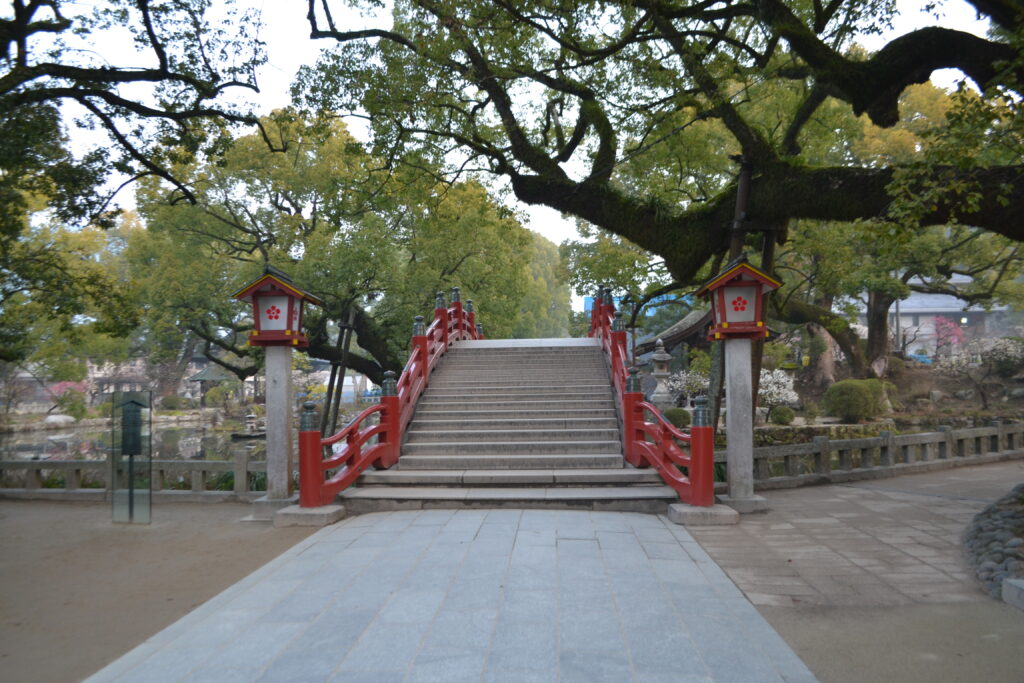
At the end of the street you pass through the shrine’s gate into the grounds and cross Shinji-ike, a pond shaped like the character for “heart”, on the Taiko Bridges — three arched bridges said to represent the past, the present and the future. Cross slowly; the view back across the pond toward the gate is one of the classic sights of Dazaifu.
Dazaifu Tenmangū: The Main Hall and the Grounds
Around 09:00 — the main hall. Morning prayers begin at the main sanctuary from about 08:30, so by nine the shrine is fully awake but the day’s crowds have not yet built. Purify your hands at the temizuya water pavilion (see Respectful Travel below), then approach the hall. The restored cypress-bark roof and fresh colour of the 1591 building are the reward for the renovation years — this is the first period in over a century when the hall has looked this new.
After praying, give the grounds at least half an hour. Look for the Tobiume plum tree beside the hall, the bronze ox statue (stroking its head is said to help one’s studies), the rows of ema, and the paths that loop behind the hall toward the teahouses and the small Tenkai Inari Shrine up the wooded slope behind. The precinct is large enough that even on a busy day, its edges feel calm.
Around 10:15 — drift back down the approach. Now the shops are open. This is the moment for a second umegaemochi, a look at the plum-themed souvenirs, and the short walk back to the station. A train back to Tenjin has you in the city around 11:30–12:00.
If You Have an Extra Hour
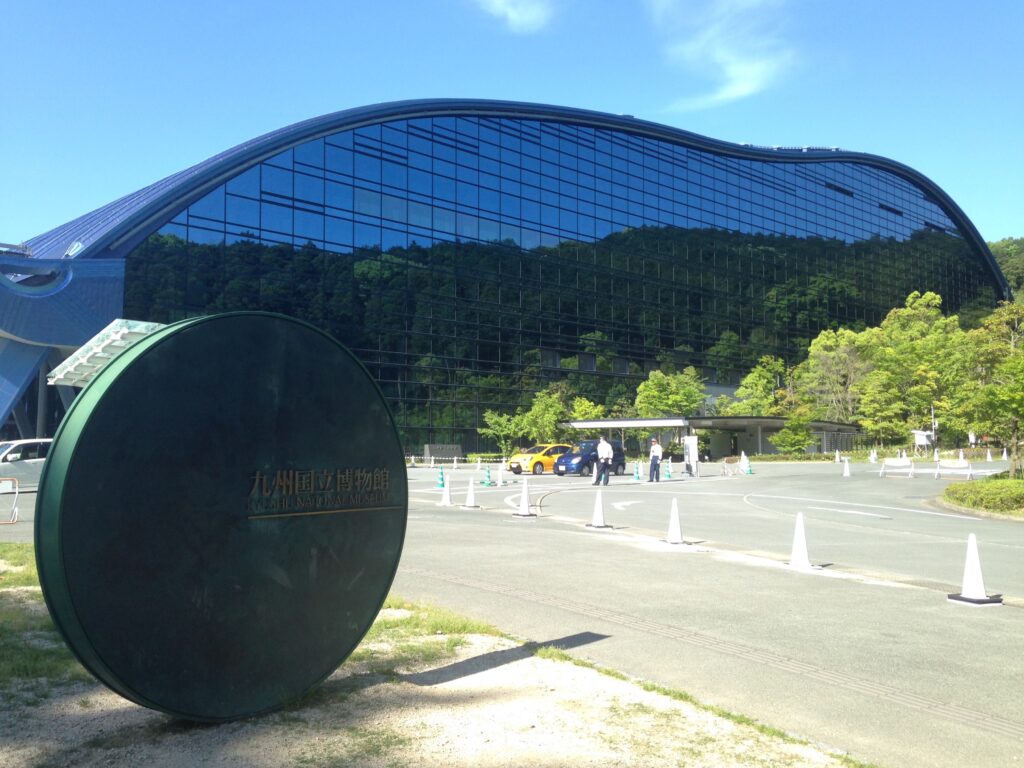
- Kyushu National Museum — Reached by a path through the shrine grounds, about five minutes from the main hall. Japan’s fourth national museum (opened 2005) tells the story of Japanese culture through its exchanges with Asia. The permanent Cultural Exchange Exhibition costs ¥700 for adults and ¥350 for university students; admission is free for visitors under 18 and for those aged 70 and over. Open 09:30–17:00 (last entry 16:30); closed on Mondays (when Monday is a public holiday it opens and closes the following day instead) and over the year-end period. One focused hour is enough for a first taste of the permanent exhibition.
- Kanzeonji Temple — One of Japan’s oldest temples, a short walk from the shrine area, holding a celebrated collection of Buddhist statues. A calm, often overlooked counterpoint to the shrine.
- The shrine’s own museums — The Dazaifu Tenmangu Museum and the Kankō Historical Museum stand within the grounds (last admission 16:00); the shrine notes that the Fukuoka City Tourist Pass gives discounted entry to both, and to the Kyushu National Museum.
Getting There
Dazaifu sits south-east of central Fukuoka, and there are three good ways in. The train is the cheapest, and the one this plan is built around; the direct bus is the simplest if you are starting from Hakata or arriving by air.
| Route | Time | Adult one-way fare |
|---|---|---|
| Nishitetsu train — Tenjin → Dazaifu (change at Futsukaichi) | about 30 min | ¥480 |
| Dazaifu Liner bus “Tabito” — Hakata Bus Terminal → Dazaifu | about 40 min | ¥800 |
| Dazaifu Liner bus “Tabito” — Fukuoka Airport (International Terminal) → Dazaifu | about 25 min | ¥700 |
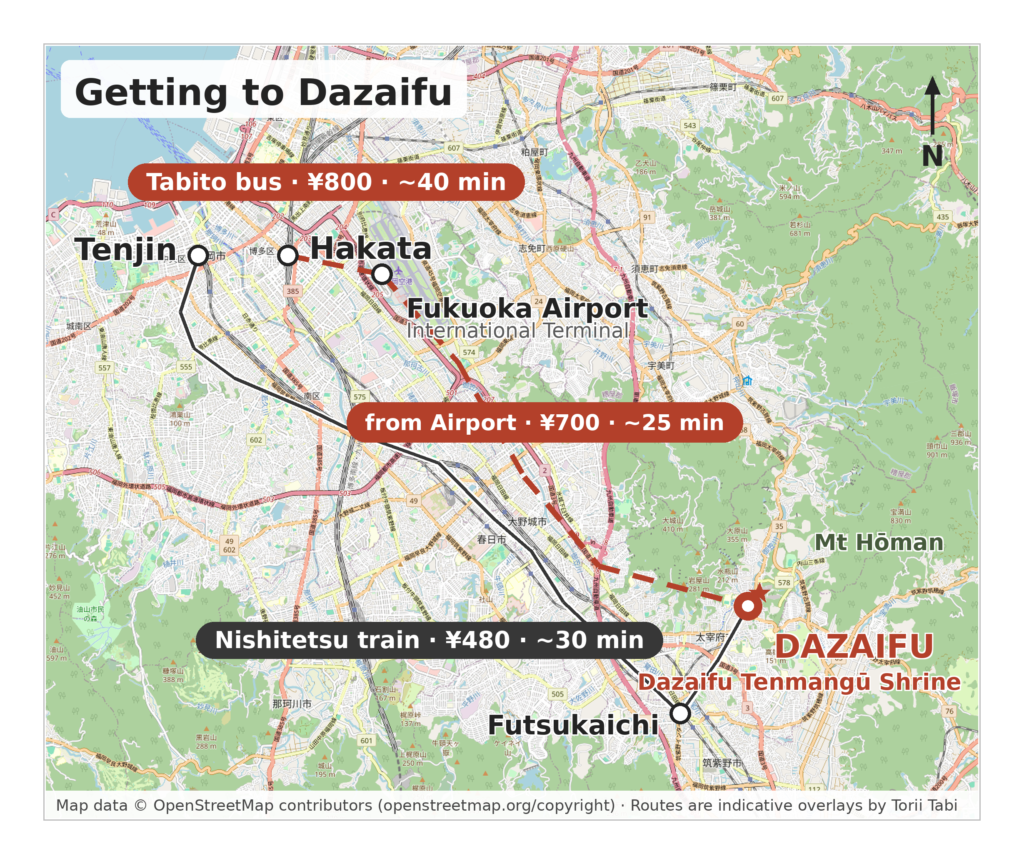
- From Tenjin (recommended for this plan): Nishitetsu train from Nishitetsu Fukuoka (Tenjin) Station, changing at Nishitetsu Futsukaichi to the Dazaifu Line — about 30 minutes, with some through express services. Adult one-way fare: ¥480 (Nishitetsu revised its fares in April 2026; older guides quoting ¥420 are out of date). Check your train on the day with Nishitetsu’s official timetable and fare search: http://jik.nishitetsu.jp/menu?lang=en (English available). Nishitetsu’s information page for visitors: https://www.nishitetsu.jp/en/timetable/
- From Hakata, by bus: The Dazaifu Liner bus “Tabito” leaves from platform 11 on the first floor of Hakata Bus Terminal, beside Hakata Station, and runs straight to Dazaifu Station — no changes, about 40 minutes, ¥800 (¥20 less if you pay by credit card or a transit IC card on board). No reservation is needed, and buses run through the day — 28 on weekdays, more on weekends and holidays. Alternatively, subway to Tenjin (about 5 minutes) and then the Nishitetsu train as above — around 50 minutes in total. Note there is no JR station in Dazaifu; rail access is Nishitetsu only.
- From Fukuoka Airport: The same Tabito bus calls at the airport on its way from Hakata: about 25 minutes to Dazaifu, ¥700 (¥20 less by card or IC). One catch — it stops at the International Terminal only. If you arrive at the Domestic Terminal, ride the free shuttle bus between the terminals first (about 11 minutes). The Tabito cannot be used for the short hop between the airport and Hakata.
- By car: The shrine has no car park of its own. Paid parking exists nearby but spaces are limited, and the shrine recommends public transport. This plan is designed around the train.
Respectful Travel
Dazaifu Tenmangū is a working place of worship first and a sightseeing spot second. A few basics, which our full guide to shrine etiquette covers in depth:
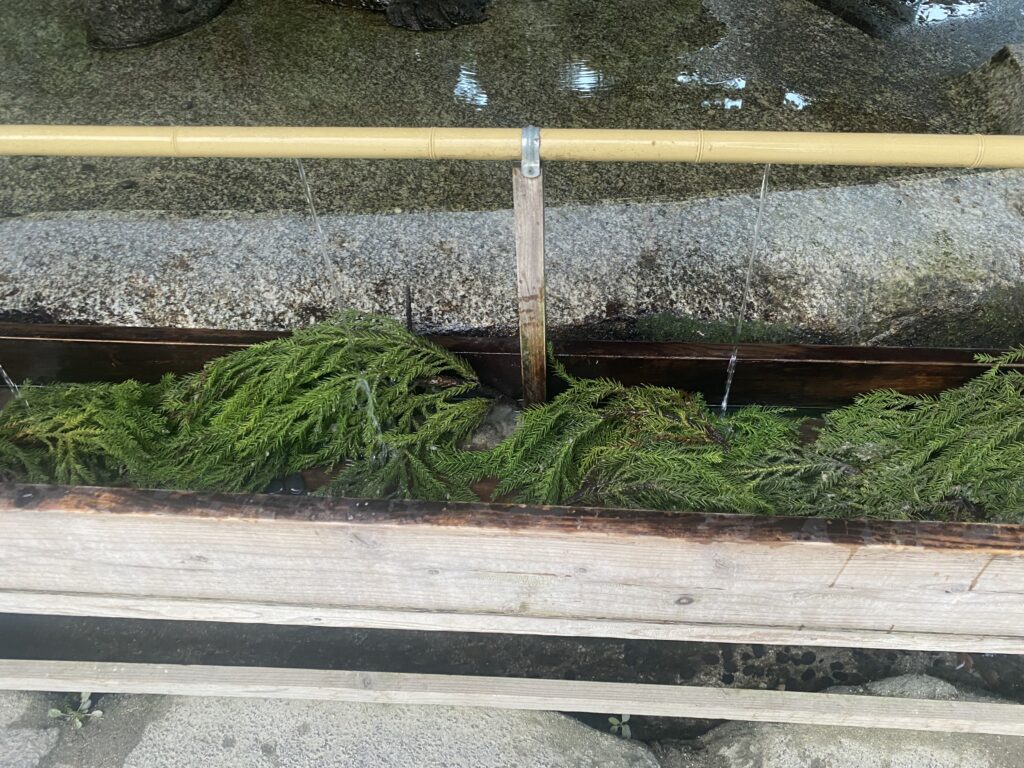
- At the temizuya (water pavilion): Rinse your left hand, then your right, then rinse your mouth using water poured into your cupped hand (never drink directly from the ladle), and let the remaining water run down the ladle’s handle before returning it.
- In front of the hall: The standard form is two bows, two claps, one bow — bow twice deeply, clap twice, pray with your palms together, then bow once more. If you toss a coin offering, do so gently before you begin.
- Photography: The grounds are photogenic, but be considerate around people in prayer, and do not photograph inside the worship hall. Follow any signs restricting photography in specific areas.
- Voices and queues: Keep voices low near the hall, and queue patiently at busy counters — for amulets, for goshuin shrine stamps, and for the most popular umegaemochi shops.
- Cash: The shrine’s FAQ notes that amulet counters take cash only, so carry some small notes and coins even if you pay by card elsewhere.
Practical Tips
- Plum season is the peak. From late January to early March the blossom draws the year’s largest crowds, and the shrine area is at its busiest around festivals and the New Year period. The early-morning structure of this plan helps, but in plum season consider a weekday as well.
- The shrine’s own hours: The grounds open by 06:30 (06:00 at the earliest times of year) and close at 18:30 from December to March, 19:30 from June to August, and 19:00 in other months. An early start is therefore easy; equally, a late-afternoon visit near closing is one of the shrine’s own suggestions for a quieter visit, if a morning does not suit your plans.
- Heat and rain: Fukuoka summers are hot and humid, and the approach and grounds offer limited shelter. Carry water, and in the rainy season (roughly June–July) expect the stone paths and the arched bridges to be slippery — wear shoes with grip.
- Luggage: There is nowhere to store luggage at the shrine, but coin lockers are available at Dazaifu Station.
- Before you go: Confirm train times in Nishitetsu’s official search (above), the museum’s opening days on its official site, and any shrine notices about ceremonies or restricted areas on the shrine’s official site. Festival days can change how parts of the grounds are used.
FAQ
Is half a day really enough for Dazaifu? For the shrine, its grounds and the approach street, yes — that is exactly what this plan covers, and the shrine itself suggests a morning or afternoon for the shrine alone. Add the Kyushu National Museum or Kanzeonji and you are closer to a full day, which is also a good plan; just don’t try to squeeze Yanagawa in as well.
How long does it take from Hakata Station? About 40 minutes by the direct Tabito bus from Hakata Bus Terminal (¥800, no changes), or around 50 minutes by subway to Tenjin and then the Nishitetsu train. From Tenjin alone, the train takes about 30 minutes and costs ¥480.
Does it cost anything to enter Dazaifu Tenmangū? No. Entry to the shrine and its grounds is free. The museums — the shrine’s own museums and the Kyushu National Museum — charge admission.
Where can I buy umegaemochi? From the shops and stalls lining the approach street between Dazaifu Station and the shrine, and at teahouses inside the grounds. They are grilled to order; eat one warm on the street for the full effect.
When is the plum blossom? The shrine’s roughly 6,000 plum trees usually begin blooming in late January and continue into early March, varying each year with the weather. The shrine’s official site is the place to check the current season’s progress.
Last Verified
Facts in this article were checked on 28 November 2026 against the following sources:
- Dazaifu Tenmangū official site (English) — shrine hours, entry, access times, museums, facilities: https://www.dazaifutenmangu.or.jp/en/plan/faq/ and https://www.dazaifutenmangu.or.jp/en/plan/first-time-visitors/
- Dazaifu Tenmangū official notice, “Worship in front of the main hall resumed” (19 September 2026) — completion of the main hall restoration and resumption of normal worship: https://www.dazaifutenmangu.or.jp/archives/1980
- Nishitetsu (Nishi-Nippon Railroad) — official timetable & fare search: http://jik.nishitetsu.jp/menu?lang=en ; visitor information: https://www.nishitetsu.jp/en/timetable/
- Kyushu National Museum official site — opening hours, closing days and Cultural Exchange Exhibition admission: https://www.kyuhaku.jp/pdf/pamphlet_en.pdf (official visitor pamphlet, 2026 edition)
- Nishitetsu official Dazaifu Liner Bus “Tabito” route page — route, standard journey times, fares and the Hakata Bus Terminal boarding point: https://www.nishitetsu.jp/bus/rosen/dazaihu_liner/

Comments
List of comments (2)
[…] so you can visit with confidence anywhere in Japan — including the shrines in our guides to Dazaifu, Takachiho and […]
[…] and on foot, at a pace that leaves room to sit down. If you have a second morning, pair it with our half-day plan for Dazaifu, Fukuoka’s famous […]