Model itinerary (based on research) — This plan was built from official sources listed at the end of the article. It is a researched model itinerary, not a visit report.
Miyajima, the island of Itsukushima Shrine in the Seto Inland Sea, is the rare famous place where the clock matters less than the sea. Twice a day the tide decides what the island shows you: a vermilion shrine standing in the water, or a great torii gate you can walk out to across the sand. A half day is enough — but only if you plan it around the tide table and the ferry timetable, in that order. This plan does exactly that, starting from Hiroshima Station.
At a Glance
- First, the two preconditions: Check two things before fixing anything else — the tide table (it decides whether the shrine floats, whether you can walk to the torii, or neither) and the ferry timetable (two companies, different last boats). Tide first, then ferries to fit.
- Duration: About 5 hours door to door (roughly 3.5–4 hours on the island)
- Start / finish: JR Hiroshima Station
- Main transport: JR Sanyō Line train to Miyajimaguchi, then ferry (JR West Miyajima Ferry or Miyajima Matsudai Kisen), then on foot
- Walking: Moderate — about 10 minutes from Miyajima pier to the shrine entrance, plus unhurried walking in the grounds; Daishoin adds a gentle climb
- Best seasons: Spring and autumn for comfortable walking; summer brings heat and humidity, and the New Year period and holiday weekends are the busiest times of the year
- Crowd-avoidance point: The island is fullest in the middle of the day. An early ferry out, or a start timed to a later tide window, keeps the pace calmer — which suits you depends on the day’s tides (see The Itinerary).
Who this suits / who it may not: This suits travellers based in Hiroshima with half a day who want the shrine done properly rather than quickly. It may not suit anyone set on climbing Mount Misen as well — the ropeway and summit deserve their own half day — or travellers whose free hours fall between the day’s tide windows, when neither the floating view nor the walk is on offer (still worth the trip, but go knowing which Miyajima you will get).
Why Visit Miyajima
Most shrines stand on sacred ground. Miyajima goes further: the island itself — Itsukushima, in Hatsukaichi City, Hiroshima Prefecture — has been worshipped as a deity for well over a thousand years, and for much of its history ordinary people did not live on it at all. The shrine was founded in 593, and its buildings in their present form were built out over the water by the warlord Taira no Kiyomori in 1168, so the island behind them could remain untouched. The shrine and its surroundings were inscribed as a UNESCO World Heritage site in 1996.
That is why the tide matters so much here. The shrine was designed to stand in the sea: at high water its corridors sit above the waves and the great torii offshore appears to float; at low water the sea pulls back and the same buildings stand over wet sand. Neither view is the “real” one — they are two halves of a single design, and a half-day visit usually catches one of them well. The craft of planning Miyajima is choosing, in advance, which half you will see; the island’s deer, shopping street and hillside temple fill the time around that choice pleasantly.
The Itinerary
The order below is a guide, not a promise — and on Miyajima the tide may ask you to run it differently. Read the two shrine patterns below and swap the blocks to match your day.
Crossing to the Island: The Ferry
Start at JR Hiroshima Station. Take a JR Sanyō Line local train to JR Miyajimaguchi Station (about 30 minutes), then walk about 5 minutes to the Miyajimaguchi ferry terminal. Both companies sail from the same terminal building, and the crossing to Miyajima pier takes about 10 minutes. Boats run roughly every 15 minutes through the day on both, so there is no need to book — but note which company’s boat you take if you buy a return ticket, as the two companies’ tickets are not interchangeable.
- JR West Miyajima Ferry — The wider timetable: first boat from Miyajimaguchi at 06:25, last boat back from Miyajima at 22:14. Its Miyajimaguchi departures between 09:10 and 16:10 follow the “Great Torii route”, passing close by the great torii on the way across — the finest approach to the island, at no extra cost (the route may be suspended depending on tide conditions). Choose JR if you hold a Japan Rail Pass or JR-WEST Rail Pass, which cover this ferry (the ¥100 visitor tax below is still payable), or if you may stay into the evening.
- Miyajima Matsudai Kisen — A slightly shorter day: first boat from Miyajimaguchi at 07:15, last boat back from Miyajima at 20:15. Choose Matsudai if its departure fits your timing better, or if you arrive by Hiroden tram, whose station stands right by the terminal. It also sells combined tickets pairing the ferry with the Miyajima Ropeway.
- Fares are the same on both: ¥200 per adult one way (¥100 for a child), plus the Miyajima visitor tax of ¥100, charged once on the way to the island and collected with your fare — ¥500 in total for an adult return. Both companies accept transport IC cards.
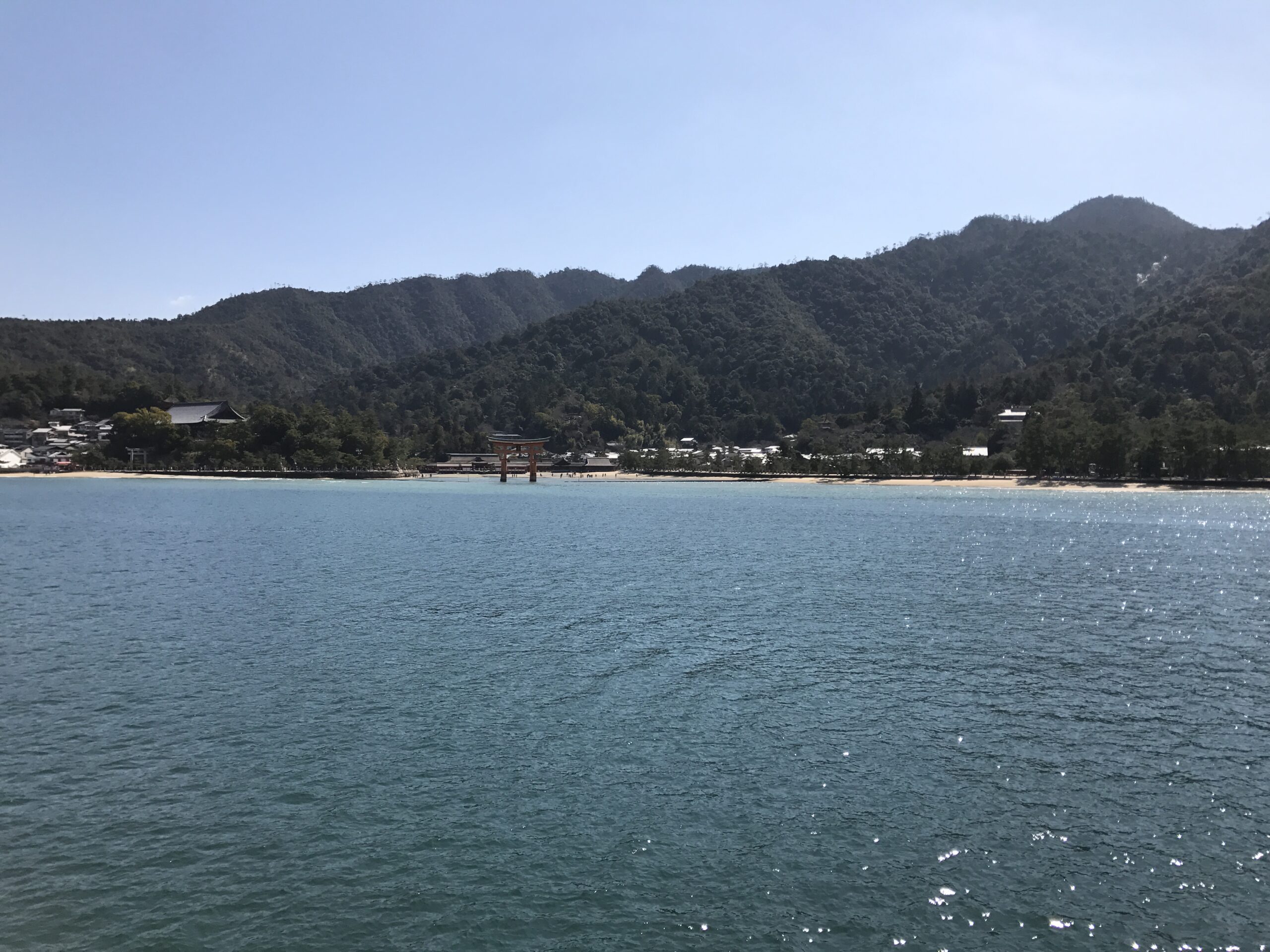
From Miyajima pier, the shrine entrance is about 10 minutes on foot, along the shore path or through the Omotesandō shopping street, which runs parallel.
Itsukushima Shrine at High Tide and Low Tide
The shrine opens at 06:30 every day and closes between 17:00 and 18:00 depending on the season. Admission is ¥300 for adults; a combined ticket including the Treasure Hall costs ¥500, and the Treasure Hall (08:00–17:00) holds sutras, armour and gifts from the Taira clan. Allow 45 minutes to an hour inside the shrine.
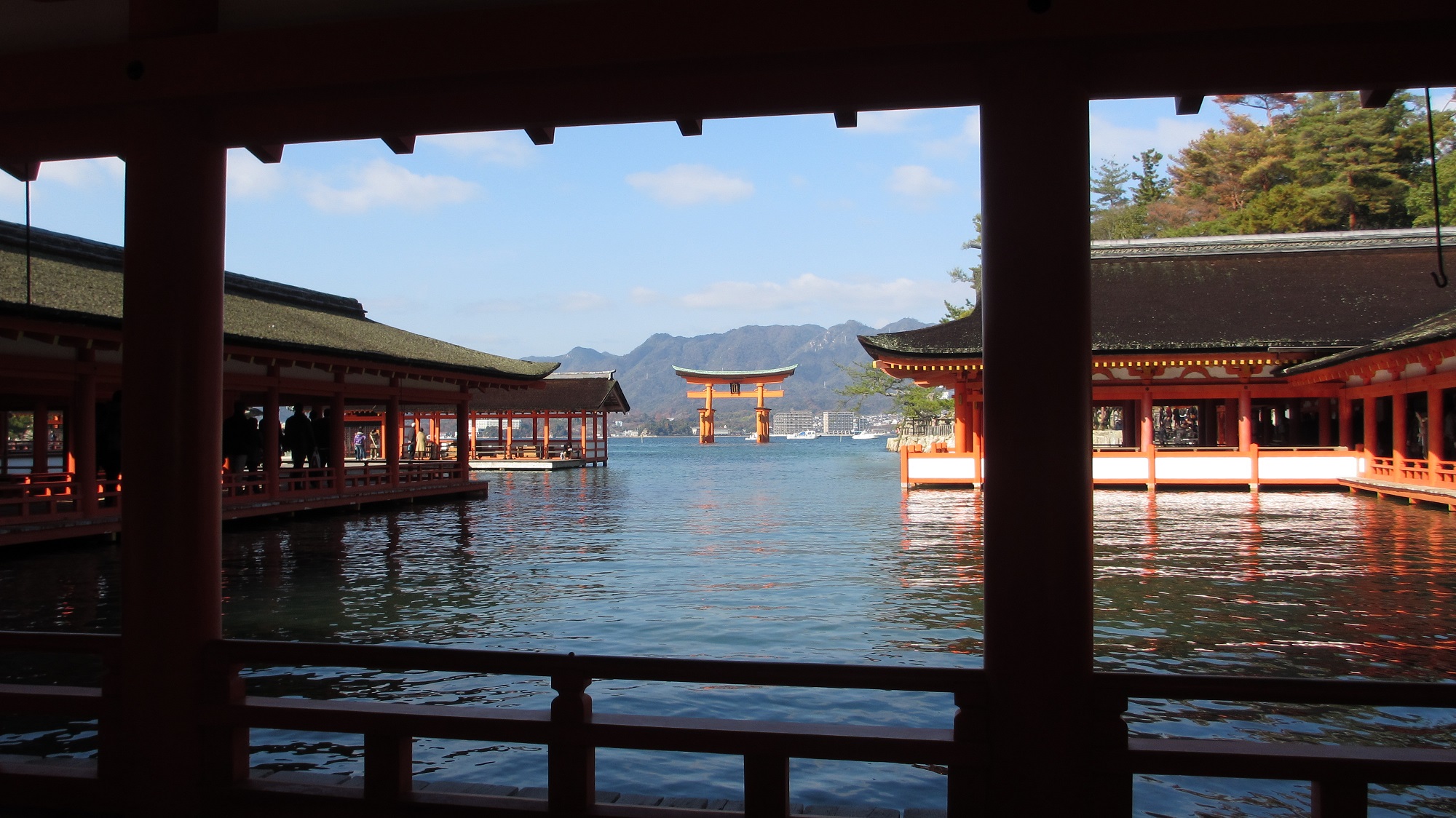
Pattern A — your half day contains a high tide (level above about 250 cm). Go to the shrine first and take your time on its corridors while the water is up. This is the view the shrine was built for: the pavilions stand in the sea, the great torii floats offshore, and the performance stage sits over open water. One practical note from the shrine itself: the corridor floorboards are laid with small gaps, so waves at high tide do not lift them — wear comfortable shoes, as high heels can catch.
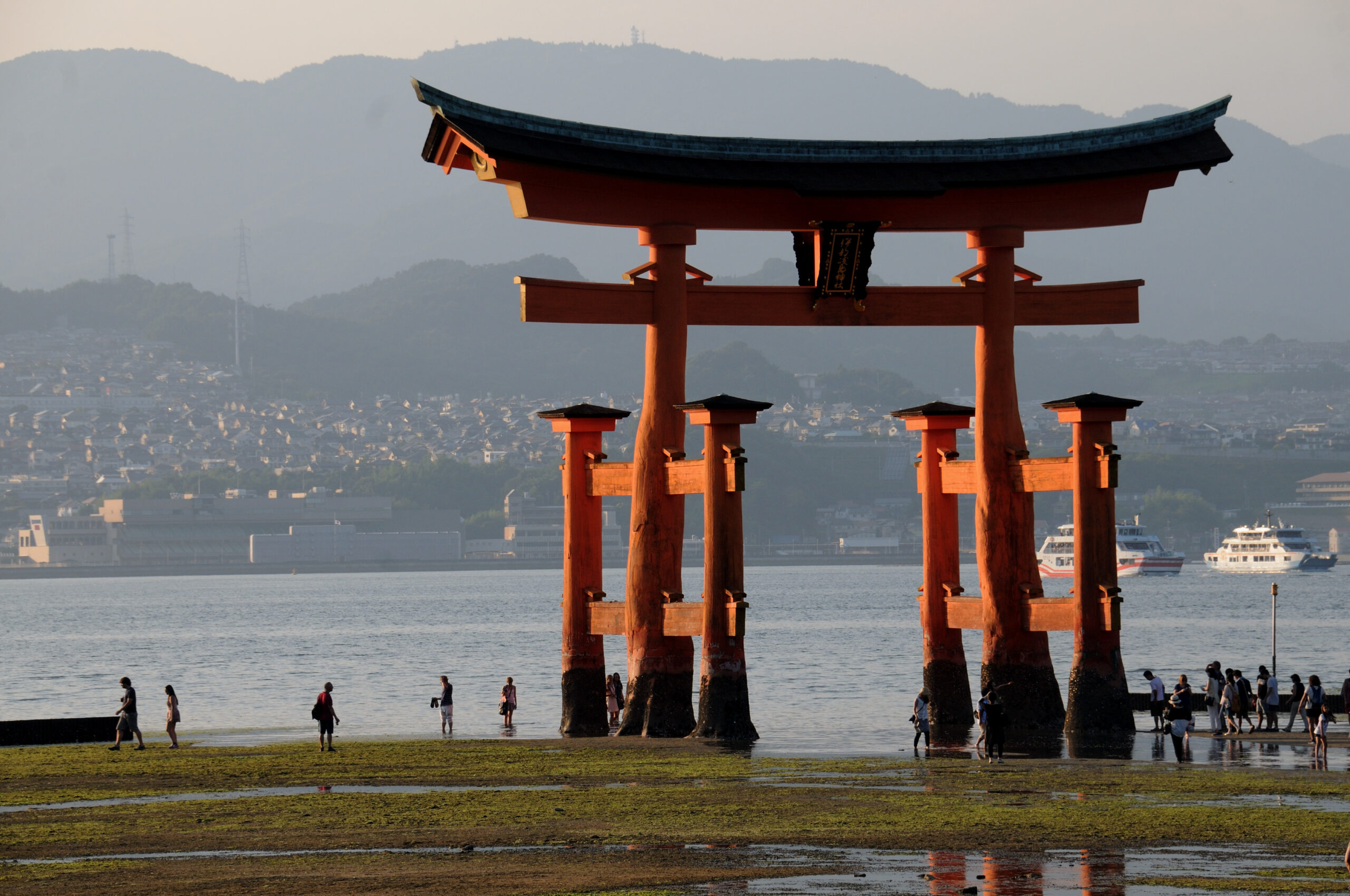
Pattern B — your half day contains a low tide (level below about 100 cm). Visit the shrine as the tide falls, then walk out across the sand to the great torii once the level drops far enough. The gate — the present one dates from 1875, stands about 16.6 metres tall, and rests on the seabed by its own weight rather than being anchored into it — is a different presence from ground level: barnacled pillars, wet sand, the shrine small behind you. Its large-scale restoration was completed in December 2022. Watch the water, not just the clock: start back well before the tide turns, and expect sandy, damp shoes. Two smaller conservation projects continue — reinforcement of the East Corridor (until December 2026; the corridor remains passable) and work on the five-storey pagoda, currently scaffolded — so check the shrine’s official notices before you go.
If your half day falls between windows — the level stays between about 100 and 250 cm — you get the shrine over shallow water and the torii standing in the shallows. Still a fine visit; weight your time toward the Treasure Hall, Senjōkaku hall (the large wooden hall above the shore, admission ¥100, 08:30–16:30), Daishoin and the town, and treat the tide as backdrop.
Daishoin and the Omotesandō
With the shrine done and time in hand, choose by energy. Daishoin Temple, the Shingon Buddhist temple at the foot of Mount Misen about 20 minutes on foot from the pier, is the island’s quiet counterweight to the shrine: founded in the ninth century, its grounds hold rows of small statues, a cave-like hall of icons, and prayer wheels along the steps. The grounds are free to enter and open 08:00–17:00. Allow 30–45 minutes, including the walk.
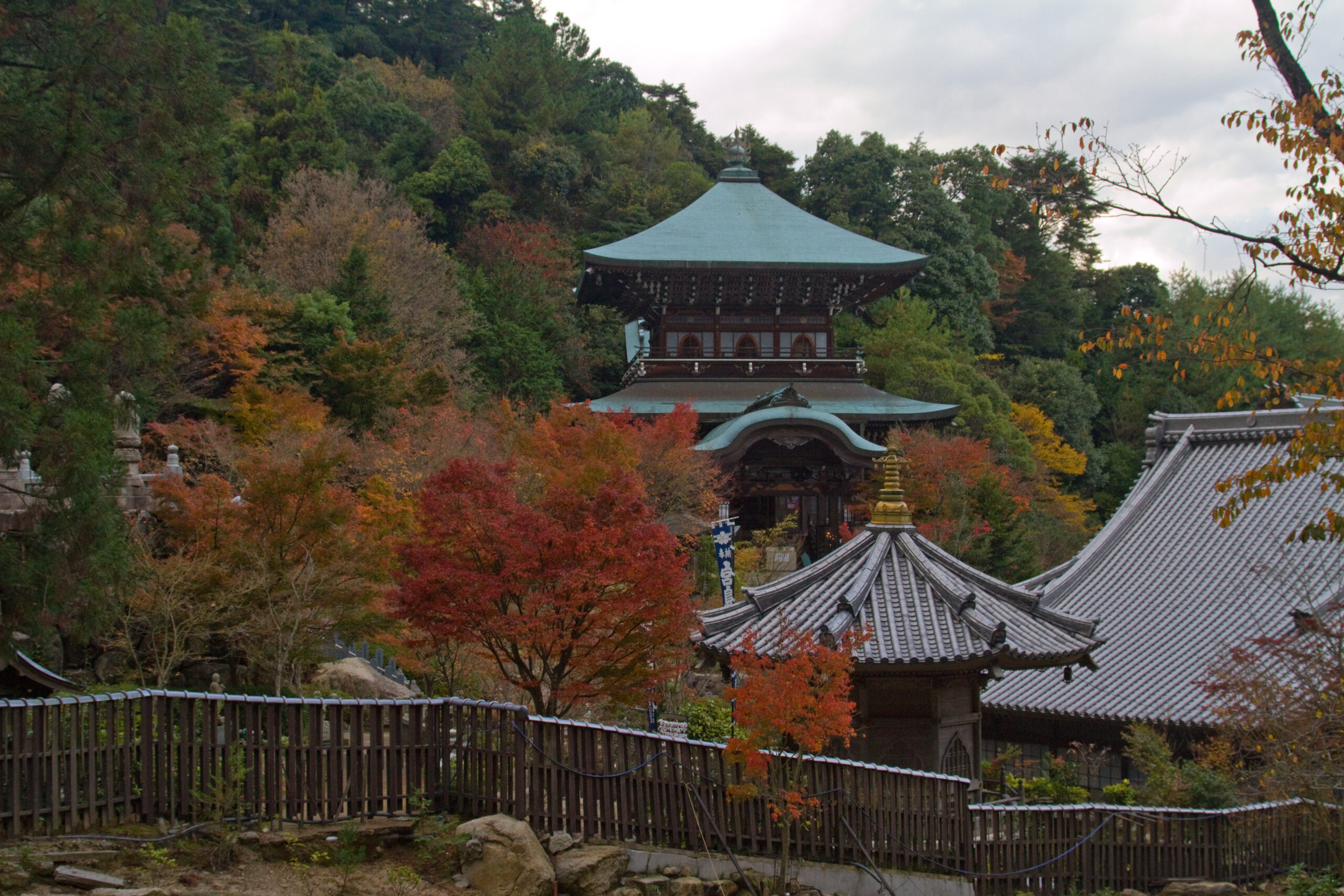
Or stay low and hungry: the Omotesandō shopping street between the pier and the shrine is where the island eats — grilled oysters, momiji manjū maple-leaf cakes with red bean paste (some shops fry them), and coffee while you wait for the ferry. Then take the boat back to Miyajimaguchi and the train to Hiroshima.
Getting There
| Leg | Time | Adult one-way fare |
|---|---|---|
| JR Sanyō Line — Hiroshima Station → Miyajimaguchi Station | about 30 min | ¥420 |
| Walk — JR Miyajimaguchi Station → ferry terminal | about 5 min | — |
| Ferry — Miyajimaguchi → Miyajima (either company) | about 10 min | ¥200 + ¥100 visitor tax |
- The standard route: JR Sanyō Line local train from Hiroshima Station to Miyajimaguchi (about 30 minutes), a short walk to the ferry terminal, then either ferry across (about 10 minutes) — just under an hour in total. Check trains on the day with JR West’s official information, and the ferries on the companies’ own pages: JR West Miyajima Ferry (https://jr-miyajimaferry.co.jp/timetable/) and Miyajima Matsudai Kisen (https://miyajima-matsudai.co.jp/en/schedule.html).
- By tram: The Hiroden streetcar from central Hiroshima (Hiroden-Hondori / Genbaku Dome-mae area) reaches Hiroden-Miyajimaguchi in about 70 minutes and stops in front of the ferry terminal. Slower than the train, but a single ride with no walk at the end.
- The visitor tax: Hatsukaichi City charges ¥100 per person each time you enter the island by boat, added to your fare on the way over (preschool children exempt). It is not charged on the way back.
- By car: Ferries do carry cars, but the island’s roads are narrow, parking is limited, and nothing in this half-day plan needs a car. The train-and-ferry route is the one this plan is built around.
Respectful Travel
Miyajima is a sacred island before it is a sightseeing destination, and its few rules follow from that.
- The deer are wild — do not feed them. Deer roam the town area freely, but they are wild animals, not pets. The city and the tourist association ask visitors not to feed or touch them: human food harms their health and teaches them to snatch. Keep snacks and paper (they will try to eat maps and tickets) tucked away, and give mothers with fawns extra room.
- Behave as a guest in a sacred place. Inside the shrine, keep voices low, do not photograph where signs forbid it, purify your hands at the temizuya, and follow the standard form in front of the hall — two bows, two claps, one bow — which our shrine etiquette guide explains in full.
- Take your rubbish home. There are very few public bins on the island, by design. Carry a small bag and take everything back to the mainland; never leave waste on the shore or the tidal flats.
- Mind the flats at low tide. The exposed sand is part of the shrine’s seascape. Walk gently, do not dig or collect, and never climb on the great torii or its base.
Practical Tips
- How to read the official tide table. The Miyajima Tourist Association publishes the year’s tide table on its official site (miyajima.or.jp): one page per month, plus a date-lookup view. For your date, find the times of high tide (満潮) and low tide (干潮) — and then, the step most visitors skip, read the level in centimetres beside each time. The association’s guidance: the shrine and torii appear to float when the level is above about 250 cm, and you can walk out to the torii when it falls below about 100 cm. “High tide” alone guarantees neither view — the centimetres decide. Levels are given for Hiroshima Port; Miyajima’s tides run slightly earlier, so arrive with time in hand.
- Last ferries (regular timetable). From Miyajima: JR’s last boat leaves at 22:14; Matsudai’s last boat leaves at 20:15. From Miyajimaguchi: JR 22:42, Matsudai 20:35. Both companies run extra boats on busy days and special timetables around New Year and festivals — confirm on the official pages linked above if you travel then. A half-day visit will not trouble these times, but an island dinner can.
- Handling the busy middle of the day. Miyajima is fullest from late morning to mid-afternoon. If your tide window falls there anyway, enter the shrine promptly on arrival and save the Omotesandō browsing for afterwards. If you have a choice of days, a weekday softens everything.
- Shoes and weather. The walk to the torii crosses wet, sometimes muddy sand — wear shoes that can get dirty; in summer carry water and a hat, as shade is scarce on the flats.
- Before you go: Check the tide table for your exact date, the shrine’s official notices for ceremonies or conservation work, and the ferry pages for timetable changes. Festival days — above all the Kangen-sai in summer — change the island’s rhythm entirely.
FAQ
Is it better to go at high tide or low tide? Neither is better; they are different visits. High tide (level above about 250 cm) gives you the shrine as it was designed to be seen — floating on the sea. Low tide (below about 100 cm) gives you the walk out to the great torii and the gate’s scale from below. If your schedule lets you choose, pick the one you have not seen; otherwise plan contentedly around the one you get, and use the in-between hours for Daishoin and the town.
Is half a day really enough for Miyajima? For the ferry crossing, Itsukushima Shrine with its Treasure Hall, and one of Daishoin or the Omotesandō, yes — that is exactly what this plan covers, at an unhurried pace. What it does not fit is Mount Misen: the ropeway and summit walk deserve another half day of their own.
When can you walk out to the great torii? When the tide level falls below about 100 cm on the Miyajima Tourist Association’s tide table for your date. The table shows the level beside each low-tide time, and the date-lookup view also states the hours when the walk is possible. Not every low tide is low enough — some days only one of the two opens the walk, and on some days neither does.
Which ferry should I take? The fares, crossing time and terminal are the same. Take JR if you hold a Japan Rail Pass or JR-WEST Rail Pass, want the sailings passing close to the great torii (Miyajimaguchi departures 09:10–16:10), or may return late (last boat 22:14). Take Matsudai if you arrive by tram or its times fit better — but be back for its last boat at 20:15.
Does the Japan Rail Pass cover the ferry? It covers the JR West Miyajima Ferry only, as do JR-WEST Rail Passes. The ¥100 Miyajima visitor tax is still payable, and Matsudai’s ferry is not covered.
Last Verified
Facts in this article were checked on 28 November 2026 against the following sources:
- Itsukushima Shrine official site (English) — visiting hours and admission (shrine, Treasure Hall, combined ticket, Senjōkaku), founding and history, shoe note for the corridors: https://www.itsukushimajinja.jp/en/admission.html ; access outline: https://www.itsukushimajinja.jp/en/access.html
- JR West Miyajima Ferry official site — regular timetable (first/last boats, Great Torii route 09:10–16:10, tide-dependent cancellation note): https://jr-miyajimaferry.co.jp/timetable/ ; fares, child and preschool rules, visitor tax, Japan Rail Pass / JR-WEST Rail Pass validity: https://jr-miyajimaferry.co.jp/en/fare/
- Miyajima Matsudai Kisen official site (English) — normal timetable (first/last boats): https://miyajima-matsudai.co.jp/en/schedule.html ; fares, round-trip fare, visitor tax, payment methods: https://miyajima-matsudai.co.jp/en/price.html
- Miyajima Tourist Association official site — annual tide table and date lookup; the association’s guidance that the shrine appears to float above about 250 cm and the walk to the torii opens below about 100 cm (levels for Hiroshima Port): https://www.miyajima.or.jp/
- Itsukushima Shrine official construction information — East Corridor structural reinforcement, April 2024 – December 2026, corridor passable during the works: https://www.itsukushimajinja.jp/jp/images/040_page/construction/kouji_24052901.pdf
- Daishoin Temple official site — temple information (grounds free to enter, 08:00–17:00): https://daisho-in.com/