
Model itinerary (based on research) — This plan was built from official sources listed at the end of the article. It is a researched model itinerary, not a visit report.
Takachiho is the long journey that earns its distance. No railway reaches this mountain town in northern Miyazaki — you arrive by highway bus or by car — and what you arrive to is two things at once: a river gorge of columnar cliffs and a waterfall, and the stage of some of Japan’s oldest myths — the cave where the sun goddess Amaterasu is said to have hidden, in the land where her grandson descended to earth. This plan covers the gorge, Takachiho Shrine and its evening kagura in one day, and shows how Amano Iwato Shrine fits if you stay the night — which, honestly, is the version we recommend.
At a Glance
- Duration: One long day (about 4–5 hours in Takachiho on a bus day trip). One night turns it into a comfortable trip and adds the evening kagura and Amano Iwato Shrine
- Start / finish: Hakata Bus Terminal, Fukuoka (alternatives from Kumamoto and Nobeoka in Getting There)
- Main transport: Highway bus (Gokase-go from Fukuoka), then on foot and local bus or taxi
- Walking: Moderate — the gorge promenade is about 1 km with steps and slopes; the path to Amano Yasugawara has stairs and slippery sections
- Driving: Mountain roads from every direction; the gorge car parks are paid and fill early on busy days
- Best seasons: Mid-November to early December for autumn colour in the gorge; mid-November to early February is also the village yokagura season. The gorge is green and shaded in summer
- Crowd-avoidance point: The gorge boats and the evening kagura are both capacity-limited and book out. Reserve both as soon as your dates are fixed, and walk the promenade earlier rather than at midday
Who this suits / who it may not: This suits travellers drawn to landscape and mythology who accept a long travel day as part of the experience. It may not suit anyone who struggles with stairs and uneven paths, or anyone hoping for a relaxed day trip from Fukuoka.
Why Visit Takachiho
Few places in Japan hold scenery and story together as tightly as Takachiho. The gorge was cut by the Gokase River through lava from Mt Aso‘s ancient eruptions: pyroclastic deposits from eruptions roughly 120,000 and 90,000 years ago cooled into columnar joints, and the river has been carving them into a V-shaped valley ever since — cliffs averaging about 80 metres, reaching 100 metres, running for some 7 kilometres. At its centre, the 17-metre Manai Falls drops into the river; it is counted among Japan’s 100 finest waterfalls, and myth says its water was brought here by a god for the descending heavenly grandchild, who found the land dry.
The town above the gorge is the shrine town of that same mythology: the land of the Tenson Kōrin, the descent of Ninigi, Amaterasu’s grandson, to begin the line that leads to Japan’s emperors. Takachiho Shrine is the head shrine of the district’s eighty-eight shrines, and a short journey west, Amano Iwato Shrine guards the cave of the sun goddess herself. In winter the surrounding villages still dance the all-night yokagura that retells these stories. You come for the gorge; you remember the way the myths are still part of local life.
The Itinerary
Times below are a guide for shaping the day, not a promise. Bus times in particular rule this trip — check them before you build anything around them.
Takachiho Gorge by Boat — and the Walking Route If Boats Are Not Running
Late morning — arrive and go straight to the gorge. From Takachiho Bus Center the gorge is about 2 km — a local bus, a taxi, or a walk of around half an hour. Go first: the boats are the most weather- and queue-sensitive part of the day, and everything else keeps more flexible hours.
The rental boats are rowboats you pilot yourself, carrying up to three adults, for 30 minutes at a time. From the water the gorge closes over you: columnar cliffs on both sides, and Manai Falls ahead, close enough that the spray reaches the boat. It is the best view in Takachiho — and the most fragile plan you will make in Kyushu. Boats are booked online only: reservations open at 09:00 two weeks before your date and close at 09:00 two days before, there is no waiting list, and the fare is set by a calendar — ¥4,100 or ¥5,100 per boat depending on the day. The river decides the rest: after heavy rain the water rises and the boats stop, sometimes for days, and there are full closure days for safety inspections several times a year. The association posts the day’s operating status each morning — check it before you set out.
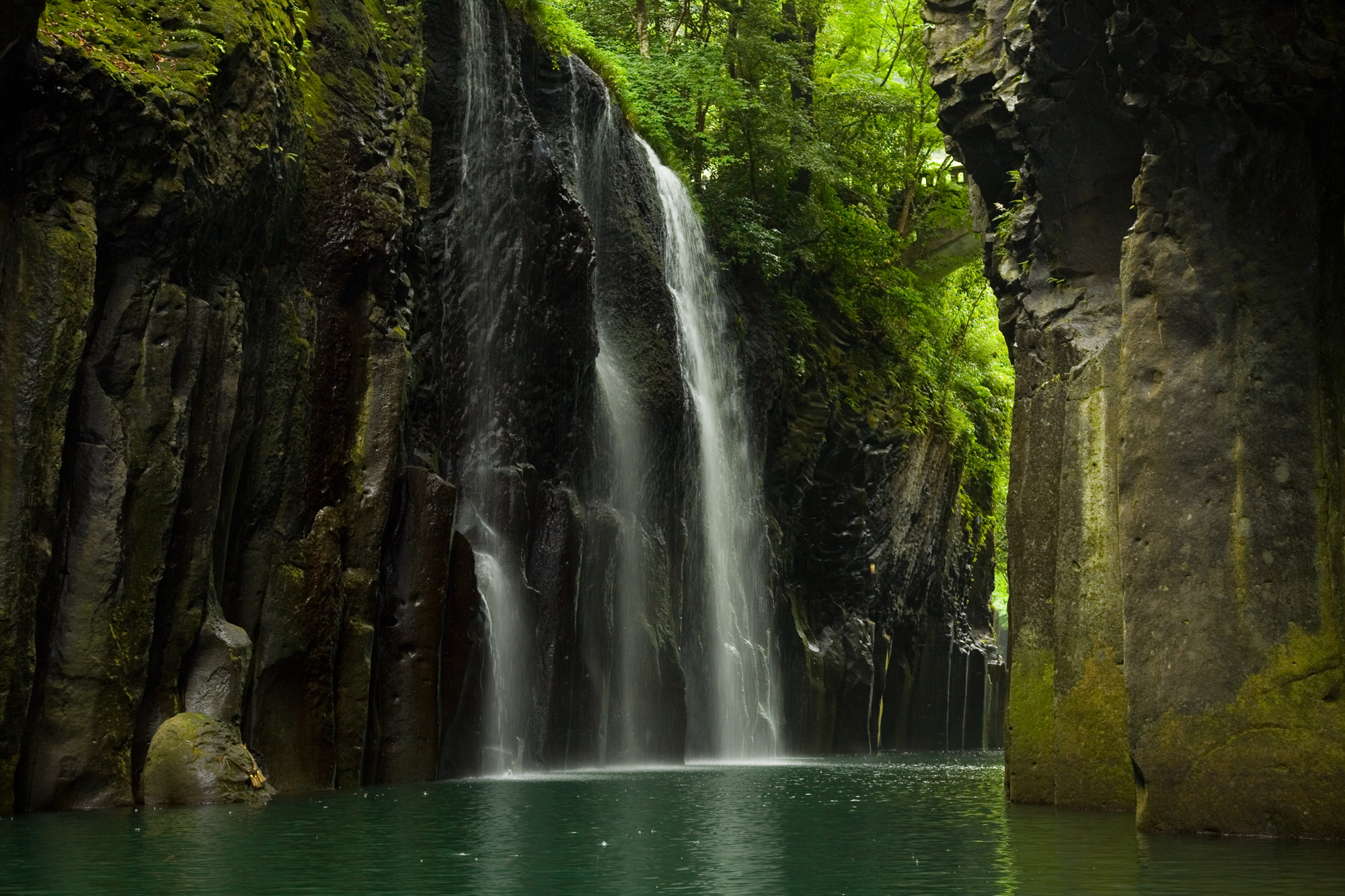
If the boats are not running — or are sold out — walk the gorge instead. A promenade of about 1 km follows the river, and it is a genuinely good alternative rather than a consolation. From the viewing platform the falls face you head-on, framed by the cliffs; along the path you pass the great columnar wall called Sennin no Byōbu (“the hermit’s screen”), the Oni-hachi power stone of local legend, and the gorge’s three bridges. Allow about 30 minutes at a strolling pace. The path has steps and slopes; from its far end a stepped trail climbs toward Takachiho Shrine, or return the way you came.
Takachiho Shrine and the Evening Kagura
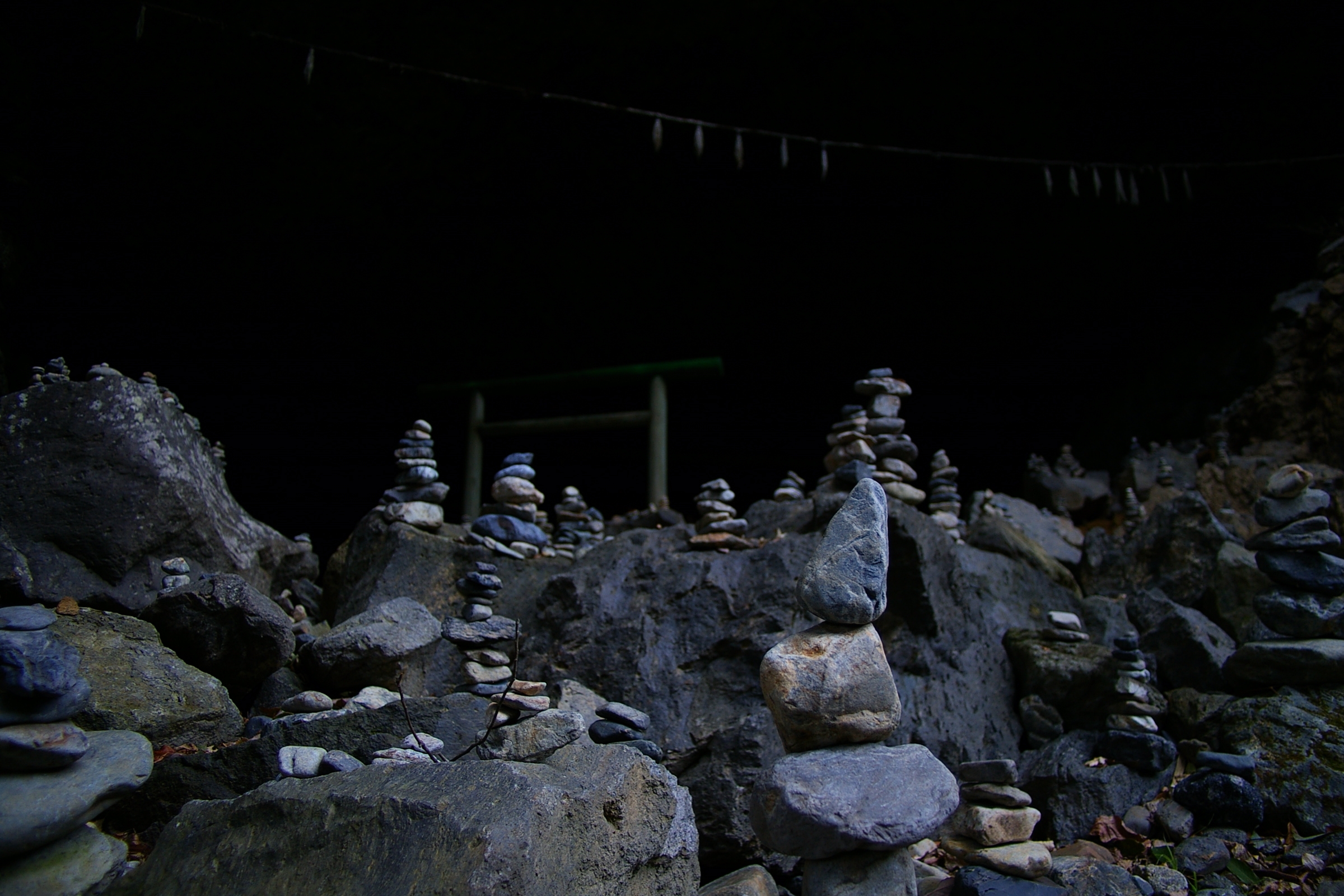
Afternoon — Takachiho Shrine. The shrine stands in a grove of tall cedars about 15 minutes’ walk from the Bus Center. Tradition dates its founding to the reign of Emperor Suinin, some 1,900 years ago, and it is revered as the head shrine of Takachiho’s eighty-eight shrines. Its deities are the Takachiho Sumegami — the gods of the Hyūga myths, including Ninigi — together with the Jissha Daimyōjin. Give the grounds unhurried time: the Chichibu cedar, said to have been planted about 800 years ago by the warrior Hatakeyama Shigetada, who came as proxy for Minamoto no Yoritomo; the Meoto-sugi, two cedars joined at the base, which couples traditionally circle three times hand in hand; and the Shizume-ishi, a “calming stone” placed here by imperial order in the shrine’s tradition, where people pray for troubles to settle.
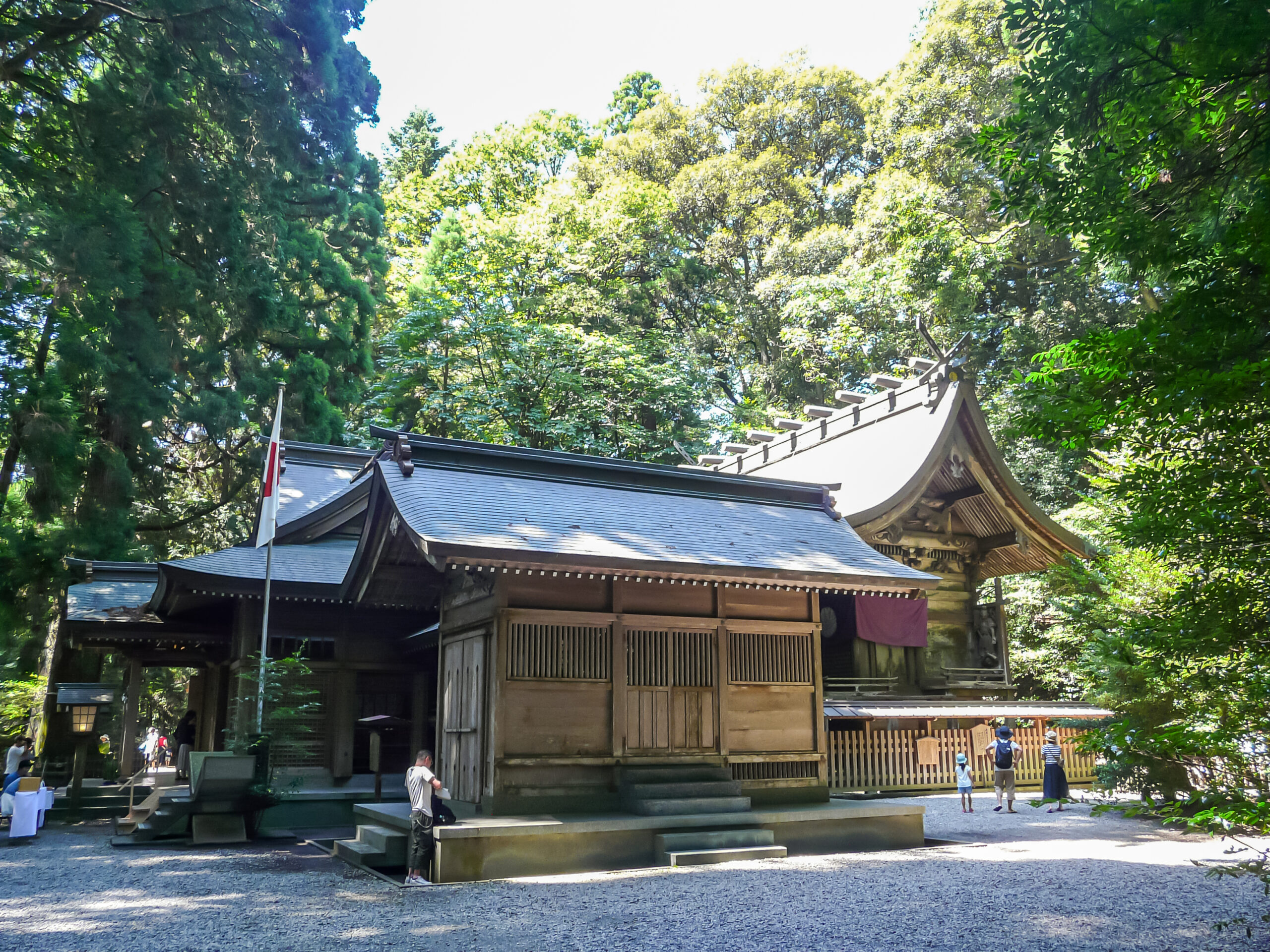
Evening — Takachiho Kagura (for those staying over). Every night in the shrine’s Kagura-den, dancers from the town’s villages perform four of the thirty-three dances of Takachiho Yokagura — the all-night ritual cycle that is a national Important Intangible Folk Cultural Property. The four pieces tell the heart of the Amano Iwato story: Tajikarao at the cave, Uzume’s dance that drew the goddess out, the forcing of the cave door, and the dance of the deities who made the land. The performance runs 20:00–21:00 and costs ¥1,000 (elementary-school children and under are free). Book online ahead — 230 of the roughly 300 seats are sold online, from 30 days before until 17:00 on the day; a further 50–60 same-day seats are sold at the Kagura-den desk from 19:30. Seating is on tatami, first come first served, with no chairs or cushions to borrow. And the one hard fact of this plan: the kagura ends at 21:00, and no bus will take you back to Fukuoka or Kumamoto after it. Seeing the kagura means staying the night.
Amano Iwato Shrine and Amano Yasugawara
If you stayed over — the next morning, or the same afternoon by car. West of the town centre, in the Iwato district, Amano Iwato Shrine faces the cave where Amaterasu hid herself and the world went dark. The shrine has two halls across the Iwato River, East and West. The cave itself, the shrine’s sacred object, can be viewed only on a free guided visit led by a shrine priest: from a worship platform behind the West Main Hall, looking across the gorge to the cave in the opposite cliff. The visit takes about 10–15 minutes, needs no booking, and is free (donations toward the shrine’s upkeep are welcomed). The shrine office is open 08:30–17:00; go in the morning if you have a bus to catch.
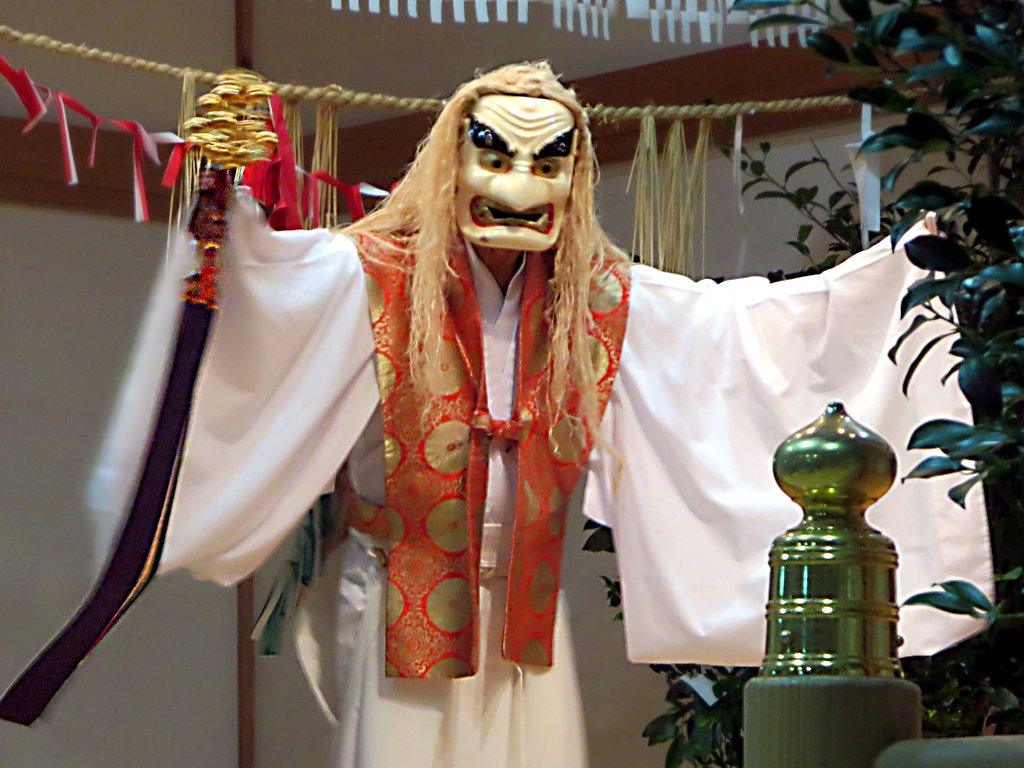
From the West Main Hall, a path follows the river for about 10 minutes — roughly 500 metres — to Amano Yasugawara, where a wide, low cave opens beside the water: the place where, the story says, the myriad gods gathered to work out how to lure Amaterasu out. Worshippers have stacked small stones into hundreds of little towers across the cave floor. It is one of the most atmospheric spots in the area, and one of the plainest: no ticket, no shop — just the river, the cave and the stones. The path is on foot only, with stairs and places that are slippery when wet, and no lighting — visit in daylight, in shoes with grip. Local buses to Iwato are infrequent; without a car, most visitors take a taxi at least one way.
Getting There
There is no train to Takachiho. Every route below is a bus, a car, or a combination of train and bus; every bus here needs planning, because frequencies are low.
- From Fukuoka (this plan’s base): The Gokase-go highway bus, run jointly by Nishitetsu and Miyazaki Kotsu, links Fukuoka with Takachiho and Nobeoka four times a day in each direction. Hakata Bus Terminal to Takachiho Bus Center takes 206 minutes on Nishitetsu’s official timetable; the bus also serves Nishitetsu Tenjin Highway Bus Terminal and Fukuoka Airport’s international terminal. All seats are reserved; fares are calendar-based and vary by date. The last bus back leaves in the early evening, before the kagura — which is why the kagura means staying over.
- From Kumamoto: The Takachiho-go express bus (Kyushu Sanko Bus) runs one round trip a day, on the timetable revised in November 2026: Kumamoto Station 09:11 → Takachiho Bus Center 12:19, returning 16:57 → Kumamoto Station 19:58. Seats are reserved; reservations open a month ahead. The second, Miyazaki Kotsu-operated round trip is suspended until further notice, so this single bus is the whole service — the 16:57 from Takachiho is not a bus you can miss. A day trip on it gives you about four and a half hours in Takachiho: the gorge and the shrine, and no Amano Iwato.
- From Nobeoka: Nobeoka, on the JR Nippō Main Line, is the closest railhead. Miyazaki Kotsu local buses climb from Nobeoka Station to Takachiho Bus Center in about 90 minutes; the Takachiho-go express also covers the section (¥1,940 one way). Services are not frequent — check times before relying on a connection.
- By car: Driving gives Takachiho its easiest shape — gorge in the morning, Amano Iwato in the afternoon, kagura at night, no clock-watching. The final stretch from any direction is winding mountain road, so arrive in daylight. The gorge car parks are paid (¥500–¥1,000) and fill early on busy days, and none is reserved for boat users — allow time for parking before a boat booking. On the busiest days the town runs a shuttle bus around the gorge area.
Respectful Travel
- The kagura is a rite before it is a show. These dances are offered to the gods, in a shrine, by members of the local communities who keep them. Watch quietly, and follow the hall’s rules: photography is permitted, but never with flash; no food or alcohol may be brought in (water is fine).
- At Amano Iwato, the cave is the object of worship itself. It is viewed only on the priest-led visit, from a distance, in a group gathered to pray as much as to look. Remember the precinct is not a park: keep voices down, take all rubbish home (there are no bins), and do not carry plants or stones away.
- At Amano Yasugawara, leave the stacked stones as you find them — each small tower is someone’s prayer. Add your own if you wish, beside the others, without disturbing theirs.
- At the shrine, the standard form is two bows, two claps, one bow. The Meoto-sugi cedars carry a much-loved tradition — circle them on the path, hand in hand, rather than climbing among the roots.
Practical Tips
- Book the boats the moment the window opens. Reservations open at 09:00, two weeks before the date, and popular days sell out fast. In “full reservation” periods (all of November; weekends and holidays in December and January), a sold-out online allocation means no same-day tickets at all.
- Check the river on the morning. The tourism association updates the boats’ operating status at about 08:00 daily. High water after rain can stop the boats for several days at a time, and set safety-inspection days in January, April, July and October close them entirely. Build the day so the gorge still works on foot.
- Check the roads, too. The mountain roads to Takachiho can be restricted after heavy rain or earthquakes. Before setting out, check the tourism association’s notices, Miyazaki Prefecture’s road information, and the mountain weather forecast.
- Kagura seats: Online booking (card payment in advance) opens 30 days ahead and closes at 17:00 on the day; reserved guests check in from 19:00, same-day tickets from 19:30. There is no performance on 31 December or 1 January, nor on the Yokagura festival nights in late November. Seating is on tatami — a cushion makes the hour kinder.
- Yokagura season: From mid-November to early February, villages across Takachiho hold the full all-night yokagura in their community halls, each on its own date. Visitors are welcomed at many, but these are village rites, not scheduled shows — check the tourism association’s yokagura schedule page for dates and etiquette, and arrange your stay around it.
- Cash and cards: Boat and kagura bookings are paid online in advance. In town, carry some cash — smaller shops, shrine offerings and local buses are not reliably card-friendly.
FAQ
Can Takachiho really be done as a day trip? Yes — but it is a long one. From Fukuoka the bus takes about three and a half hours each way; from Kumamoto there is exactly one bus a day in each direction. A day trip covers the gorge and Takachiho Shrine if the boats run, but it cannot include the evening kagura, and Amano Iwato only fits with a car and an early start. One night is the version we recommend.
What if the boats are not running on the day I go? Go anyway. The promenade gives you the falls head-on from the viewing platform and the cliffs at close range, and the shrine, the kagura (if you are staying) and Amano Iwato do not depend on the river. Just do not build a day that collapses without the boats — plan the walk as the backbone either way.
Do I need to book the kagura in advance? Not strictly — 50 to 60 same-day seats are sold at the Kagura-den desk from 19:30. But the online allocation (230 seats) regularly sells out, especially on weekends and in autumn. If the kagura is a reason for your trip, book online as soon as your dates are set.
Is there a train station in Takachiho? No. Takachiho has no railway. The approaches are the highway buses from Fukuoka and Kumamoto, the local bus from Nobeoka (the nearest station), or a car.
When is the best time to visit? For colour, mid-November to early December, when the gorge’s maples turn — also the busiest season, so book everything early. For the deepest version of its culture, come in yokagura season (mid-November to early February) and stay the night. In summer the gorge is green, but the region is hot and humid, and heavy rain is most likely to stop the boats.
Last Verified
Facts in this article were checked on 28 November 2026 against the following sources:
- Takachiho Town Tourism Association — rental boat page: https://takachiho-kanko.info/boat/detail.php
- Takachiho Town Tourism Association — Takachiho Kagura information: https://www.takachiho-kanko.info/kagura/information/
- Takachiho Town Tourism Association — Takachiho Shrine sightseeing page: https://www.takachiho-kanko.info/sightseeing/5/
- Amano Iwato Shrine official site — cave visits, Amano Yasugawara, office hours: https://amanoiwato-jinja.jp/pages/33/ and https://amanoiwato-jinja.jp/pages/31/
- Miyazaki Kotsu — Takachiho-go express timetable and fares, revised 1 November 2026 (times, fares, suspension notice): https://www.miyakoh.co.jp/express/mediafile/n-kumamoto-jikoku-20261101.pdf
- Kyushu Sanko Bus — Takachiho-go timetables (reservations from one month ahead): https://www.sankobus.jp/busportal/wp-content/uploads/tt-takachiho-fromkumamoto-20240901.pdf
- Nishitetsu — official timetable and fare search (Gokase-go Hakata–Takachiho, 206 minutes): https://jik.nishitetsu.jp/
- Miyazaki Prefecture official tourism site — Takachiho Kagura event page (nightly kagura): https://www.kanko-miyazaki.jp/event/1172

Comments
List of comments (1)
[…] as an overnight, giving the caldera a full day as in this plan, or paired with Takachiho (see our Takachiho itinerary) over two […]