
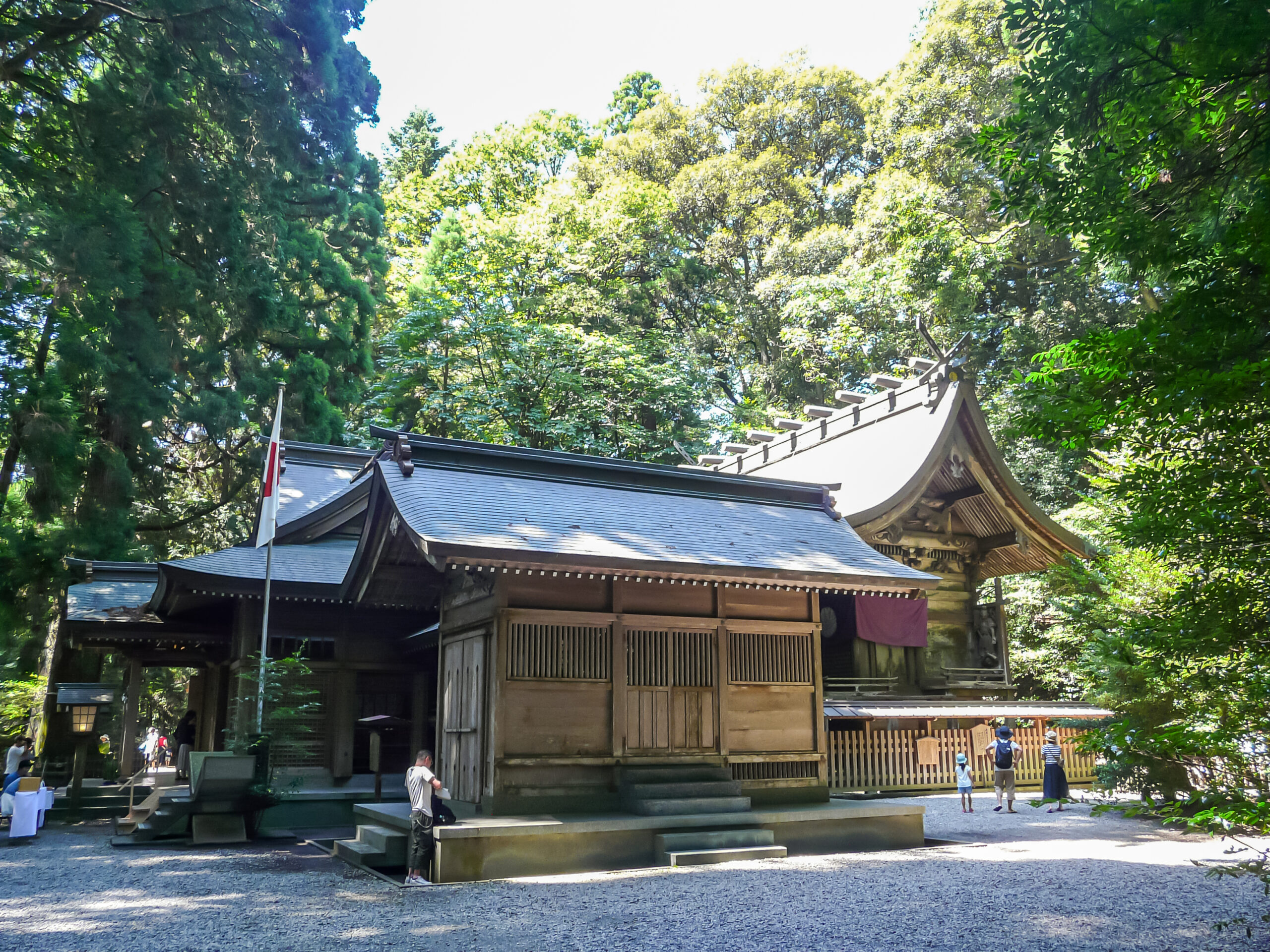
Shrines are among the calmest places you can visit in Japan, and anyone is welcome, whatever their faith. The customs are simple once you have seen them once: a bow at the gate, water for your hands, a coin, and a short, quiet prayer. This guide follows the basic form published by Jinja Honcho, the Association of Shinto Shrines, so you can visit with confidence anywhere in Japan — including the shrines in our guides to Dazaifu, Takachiho and Miyajima.
The Visit at a Glance
- Bow once before passing under the torii gate.
- Walk along the side of the approach path.
- Rinse your hands and mouth at the water basin (temizuya).
- Place a coin in the offering box, and ring the bell if there is one.
- Pray: two bows, two claps, one bow.
- On your way out, turn back toward the hall and bow once more.
Before You Begin: Shrine or Temple?
Shrines (jinja) belong to Shinto and enshrine kami — the deities and spirits of Japan’s indigenous faith. Temples (tera) are Buddhist. The easiest way to tell them apart is the entrance: a shrine has a torii gate. The prayer differs too. At a shrine you clap; at a temple you press your palms together quietly and do not clap. This guide is about shrines.
Step 1: At the Torii
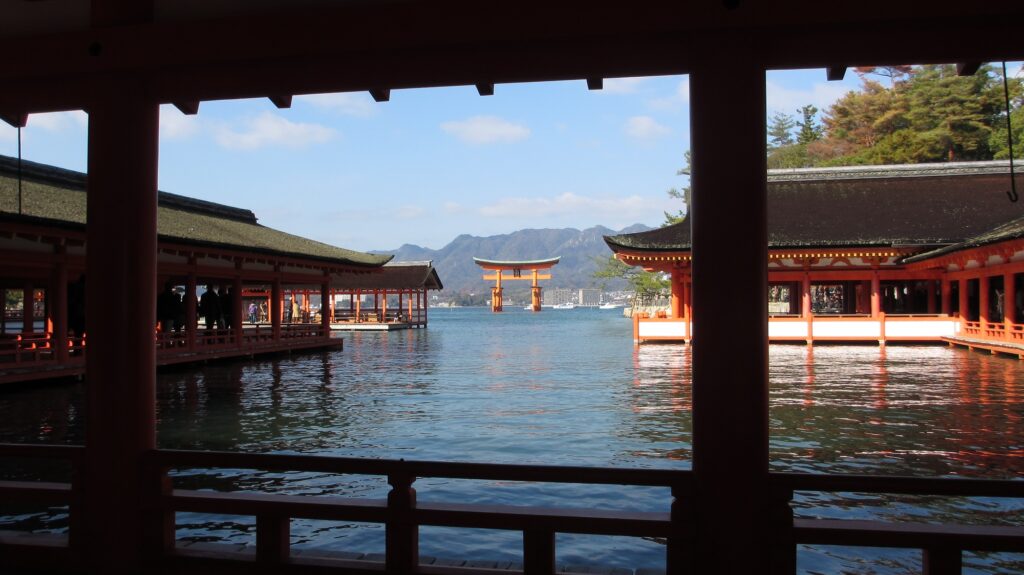
The torii marks the boundary between the everyday world and the sacred ground. It is polite to bow once before you pass under it — think of it as greeting the household as you step into someone’s home. When you leave, turn back toward the main hall after passing the torii and bow once more.
Step 2: The Approach
The path from the torii to the shrine buildings is called the sandō. By custom, visitors walk a little to one side: the centre of the path is regarded as the way of the kami. It is a custom rather than a strict rule — there is no need to hug the edge or to get in anyone’s way. Walking slightly off-centre, at an unhurried pace, is enough.
Step 3: Purify at the Temizuya
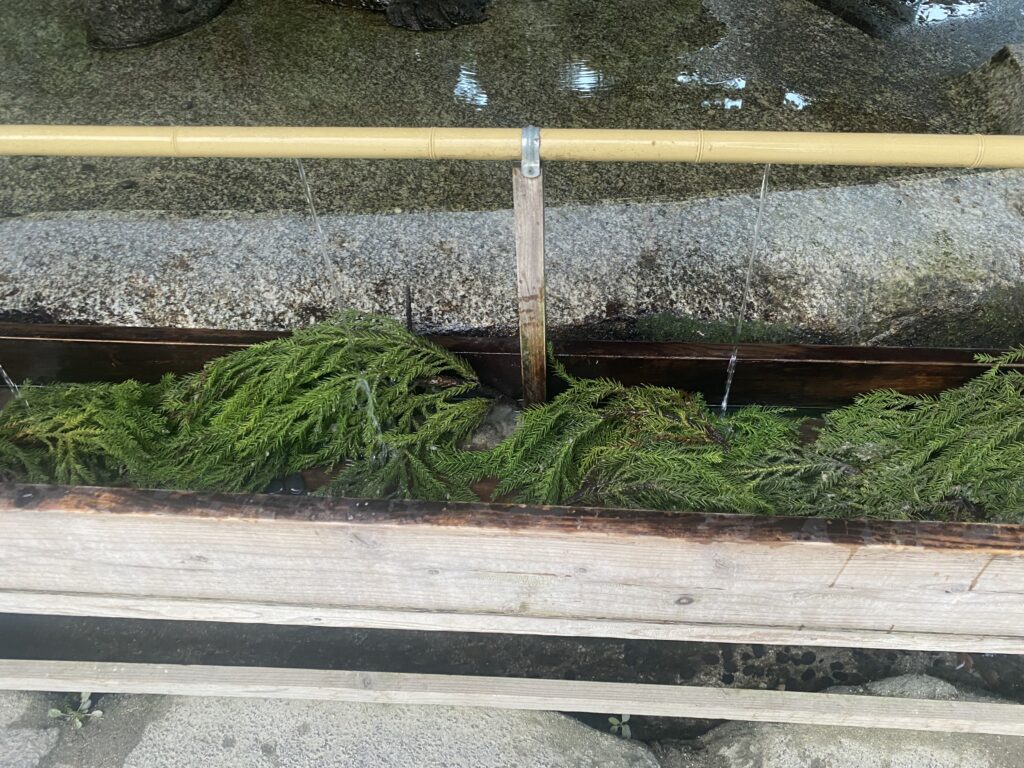
Near the entrance stands a roofed water basin, the temizuya. Rinsing here is a short act of purification, preparing body and mind before you stand before the kami. Where ladles are provided, the usual order is:
- Take the ladle in your right hand, fill it, and pour water over your left hand.
- Switch the ladle to your left hand and pour water over your right hand.
- Switch back to your right hand, pour a little water into your cupped left palm, and rinse your mouth from your palm. Spit the water out discreetly beside the basin, never back into it — and never put the ladle to your mouth.
- Pour a little water over your left hand once more.
- Finally, tilt the ladle upright so the remaining water runs down and rinses the handle, and set it back face down.
Some shrines no longer set out ladles and ask you to rinse under running water instead. Either way, one ladle of water is meant to be enough for the whole sequence.
Step 4: At the Main Hall — Offering and Prayer
Stand before the offering box and bow lightly. Place a coin gently into the box — there is no set amount; the familiar 5-yen coin is a folk favourite because “go-en” also means a good bond or fate, but any coin is fine. If there is a bell above the box, ring it two or three times with the rope to announce your visit. Then pray in the basic form:
- Bow twice, deeply.
- Clap twice at chest height.
- Close your eyes and pray in silence — give thanks first, then your wish.
- Bow once more, deeply.
A few shrines keep their own form — Izumo Taisha, for example, uses two bows, four claps and one bow — so if a shrine posts its own instructions, follow the signs on site.
After Praying: Omikuji, Ema and Goshuin
Omikuji are the paper fortunes drawn at the shrine office, usually for a small fee. Read yours, and then choose: many visitors tie an omikuji to the racks or pine branches provided, leaving its luck — good or bad — at the shrine; taking it home is equally accepted.
Ema are the small wooden plaques on which visitors write a wish or thanks and hang it at the shrine. Write on the plain side, and hang yours with the others.
Goshuin is the calligraphic seal a shrine gives as a record of your visit and prayer, written or stamped into your own seal book (goshuincho) at the shrine office, usually for a fee of around ¥300–¥500. It is a keepsake of worship rather than a sightseeing stamp, so receive it with the same quiet manner as the rest of your visit.
Photography and Quiet Manners
Photography rules vary by shrine, and signs always come first. As a general guide: the grounds are usually fine, the inside of halls is usually not, and some sacred areas are off limits entirely. Do not photograph people while they are praying. Keep your voice low, walk rather than run, and eat only in the areas set aside for it — at shrine festivals, the food stalls are part of the visit, but the approach is not a dining room. Take any litter home with you.
Practical Tips
- Morning visits are calmer almost everywhere; many of our shrine guides suggest early starts for this reason.
- Carry small coins. Offering boxes and omikuji do not take cards, and shrine offices may not be able to change large notes.
- If you are unsure of anything, watch the visitors ahead of you, or ask at the shrine office — a quiet question is always welcome.
- Shrines are places of worship first. If a ceremony is under way, wait at a distance and enjoy watching respectfully.
FAQ
Can anyone visit a shrine, whatever their religion?
Yes. Shrines do not ask visitors what they believe. You are welcome to follow the customs in this guide, or simply to walk the grounds quietly.
How much money should I offer?
There is no prescribed amount. A single coin placed gently is a complete offering; the 5-yen coin is popular for its lucky pun, not because it is required.
What if there are no ladles at the water basin?
Some shrines have replaced ladles with running-water rinsing. Rinse your hands under the water provided and continue; the intention is the same.
Can I take photographs?
Usually yes in the grounds, but follow the signs on site. Do not photograph inside the halls or while people are praying, and respect any area marked as restricted.
Last Verified
November 29, 2026. The prayer form, temizuya sequence and approach customs in this guide follow the visitor guidance published by Jinja Honcho (the Association of Shinto Shrines); individual shrines may keep their own forms, as noted in the text. See the etiquette in practice in our guides to Dazaifu Tenmangu, Takachiho Shrine and Itsukushima Shrine on Miyajima.

Comments
List of comments (4)
[…] Tenmangū is a working place of worship first and a sightseeing spot second. A few basics, which our full guide to shrine etiquette covers in […]
[…] the shrine, the standard form is two bows, two claps, one bow. The Meoto-sugi cedars carry a much-loved tradition — circle them on the path, hand in hand, […]
[…] and follow the standard form in front of the hall — two bows, two claps, one bow — which our shrine etiquette guide explains in […]
[…] serve their neighbourhoods daily, and Hakozaki’s festivals belong to the whole city. Our full guide to shrine etiquette covers the basics: bow at the torii, walk to the side of the approach, rinse your hands at the […]